The Power of “Job Talk” For Adults

After many years of on and off cigarette smoking, I was finally able to quit for good in February 2017. At the same time, I began running, and actually ran, and finished, my first half marathon in October 2017. Running was just something I did – not that  important, except when training for a race.

Fast forward a few years, to a long overdue check up. As the nurse took my pulse, she looked puzzled. She took it again, and shaking her head, said “your pulse is so low for someone your age.” At which point, I said, “I’m a long distance runner,” and it all suddenly made sense.

Just saying those words, “I’m a long distance runner,” changed so much for me. This isn’t just something I do, it’s part of who I am. Just thinking about that, on days I want to roll over and go back to sleep instead of putting in 8 miles, gets me to push off the covers and get moving.

And when runs, or races, don’t go the way I hope, it’s easier to deal with, because ups and downs are part of being a runner. The longevity implied by being, rather than doing, allows for success and failure, along a continuum.

Many – MANY – ADHDers struggle with task initiation, procrastination, and task avoidance. While this can be attributed, in part, to weak executive functions, and can, in part, be supported by a variety of strategies, there is also the cyclical shame and anxiety associated with these challenges. We can’t get started, so our work might be late or not as solid as it could be, which causes anxiety (“What if I can’t ever get this done?” shame (“I should be able to do this, why can’t I??”). Who wants to go through that over and over? Isn’t avoidance easier? (Ultimately we know the answer to that is no, but in the moment, that avoidance of shame and guilt is all we can handle).

How about approaching tasks slightly differently?

Kristen Jacobsen CCC/SLP, and Sarah Ward CCC/SLP propose using what they call “job talk” with kids. Rather than “Write this essay,” they suggest the declarative “We are essay writers,” claiming that using this format helps to activate non-verbal working memory and procedural memory, creates structure, and limits emotional reactions. Research has also been conducted on adult responses. When comparing reactions between “being a voter” (personal identity) and “voting” (behavior),it was found that the personal-identity phrasing significantly increased interest in registering to vote.

So how do you put this into action? 

You can be very broad about this, as I was with “I am a long distance runner.” However, if starting on a specific task is alluding to you, that can be the basis of your statement. “I am a job searcher,” “I am a kitchen organizer,” “I am a proposal writer.” Does that feel different to you? Do you start to imagine what that means? Prior thinking about your role is a mental dress rehearsal, which is a very powerful tool.

So – be a job talker today. And I’ll be a long distance runner. Let’s see how far we can get.

PS – Next post – calling tasks what they really are…to us (bad language included).

Resources:

Bryan, C. J., G. M. Walton, T. Rogers, and C. S. Dweck. “Motivating Voter Turnout by Invoking the Sense of Self.” Proceedings of The National Academy of Sciences 108.31 (2011).

Kristen Jacobsen and Sarah Ward. “360 Thinking: Breakthrough Strategies to Develop Independent Executive Function Skills.” (2023).

No Summer Slide For Executive Functions!

In the words of Alice Cooper:

School’s out for summer,

School’s out forever.

I’m bored to pieces.

Before you hear that chorus of “Mom, what should I do? I don’t have anything to do. Tell my brother/sister to stop hitting me!” or you just surrender to letting the kids go on their iPads for eight hours, here are a few fun activities that in addition to keeping your kids occupied, will give them some great executive function practice (Ssshhhh! Don’t tell them this!) Note: these activities are designed for you or another adult to do with your child, in order to keep the task structured. Over time, your child may learn to structure these activities on their own.

Planning an outing – this could be anything from a trip to the ice cream shop, to a day at the beach, to a weekend at a hotel. Starting from the end goal, determine what steps are needed to get there (for example, going to the ice cream shop requires money and transportation; you need to know when you are going, how to get there, who is going and extending invitations to those who are not part of the planning, and what kind of ice cream you would like to get). Writing the steps is great practice for planning school projects and homework! More complex outings will require more planning; perhaps divide this up if you have more than one child involved. Executive functions utilized:  planning, organization, time management, working memory, emotional control, sustained attention, goal directed persistence, flexibility.

Cooking/Baking – Following a recipe is a great way to exercise the executive functions. And bonus! Math skills! The steps are already determined, but gathering ingredients and utensils, working with a timer (if necessary), deciding how much to make (doubling or halving definitely uses math), what size serving dish or bowls are needed – all of these can help your child use their executive function muscles. And think about the self esteem boost that comes from completing something delicious! Executive functions utilized: planning, organization, time management, working memory, emotional control, sustained attention, goal directed persistence, flexibility.

Crafts – there are so many different crafts, I couldn’t begin to list them all here. Crafting involves having a vision of what you would like the end result to be, and then determining the steps and materials that are needed to get there. So for example, if your child wanted to create a painting (assuming they have paint in the house), they would first have to decide what they would like their painting to look like. Planning backwards (and again, writing the tasks down), the steps would include putting on a smock, finding paper, paints, brushes and water, spreading newspaper on the table for spills, perhaps drawing the picture first, painting, and then cleaning up. After that, they can gather the materials (discussing these first is also good planning practice) and follow the steps to create their own Mona Lisa!  Executive functions utilized: planning, organization, time management, working memory, emotional control, sustained attention, goal directed persistence, flexibility.

These are just a few examples of how your child can continue their executive function development over the summer. So next time your child is “bored to pieces,” pull out that recipe book or paintbrush, and give those executive functions some exercise!

Back At It

The last time I wrote a blog post was November 4, 2024. 

It would sound so legit if I were to say that so many earth shattering things had occurred in my life, I just didn’t have an extra second to devote to blogging. Or that I’d found someone who said they would write the blog for me, and then they absconded with their payment, and didn’t write a thing. Drama always distracts from the facts.

But in reality, and truthfully…I just wasn’t feeling it. Since I am my own boss, the urgency level is determined by me. It’s super easy to tell my employee (me) “oh, that’s not really a priority right now.” Just because it’s something I wasn’t in the mood to do.

Sound familiar?

We all have those tasks that we can convince ourselves really aren’t important, or are just not important at the moment. Often, and not so coincidentally, these are the things that we also don’t feel like doing. Plus with ADHD, importance doesn’t have the same power that it does for neurotypicals. If you’ve ever struggled to start on your taxes, you know what I’m saying.

So how did I get back to my laptop and start writing a blog post? Here are a couple of strategies that helped.

1 – Discard embarrassment – we can get completely stuck by being concerned with what others will think. The reality is, it’s pretty unlikely that anyone cares enough to be thinking “Oh, here’s Annette’s blog. She’s really been slacking off on this.” If someone actually has noticed that my blog has been on an unannounced hiatus, that might mean they actually read it, which would be a positive!

2 – Find value in the task – A potential client, when contacting me to set up a Discovery Session, said that he gets my “newsletter.” This was a solid indicator that the blog was having a direct impact on my business. Seeing what it is about this task that will make your life easier or better in some way can nudge you towards getting started, or in my case, re-started.

3 – INCUP – According to Dr. Thomas Brown, ADHD brains are interest based (anyone who has spent hours absorbed in learning about something relatively obscure can attest to this). Therefore, per Dr. Brown, motivation for ADHDers comes from interest, novelty, challenge, urgency, or passion (otherwise known as INCUP).”Sure,” you say,”that works great when it’s something I find compelling. But how about something I’m just not into?” The trick is to turn the task into something that has at least one of the INCUP motivators going for it. In my case, I went for novelty by body doubling with a friend to write my first blog post of 2025. I added in some urgency by telling my body doubling partner what I was going to be working on, inserting some accountability into the equation. I could’ve tried a challenge, and seen how quickly I could get a post done. Or passion, by first making a list of blog posts I’d be excited to write.

4 – Rewards – there are many things I might want to do this afternoon instead of writing this blog post. So I will let myself do them – after the post is written.

All in all, writing this blog post felt very comfortable for me. And I was able to get it done, using the strategies above.

Welcome back to me!

My Prime Days Picks For ADHDers!

Prime Days are here! (July 16 and 17). Here are some products that I think are great for ADHDers and people with executive function struggles. Many are kid related – back to school is not too far away – but a few are for adults and/or kids. Happy Shopping!

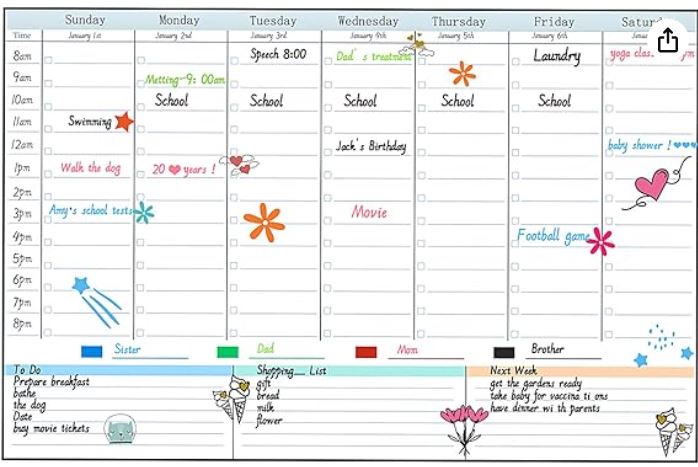
POPRUN Magnetic Weekly Dry Erase Calendar

What makes this particular dry erase calendar a favorite? I love that you can write in the times of day on the left side. This enables you, and your family, to see exactly how the day will look. Dentist from 3pm to 4pm? It’ll be blocked out. White space? Ah, that’s free time! Helping those with time blindness actually see time is such a benefit. https://amzn.to/4bLKFLe

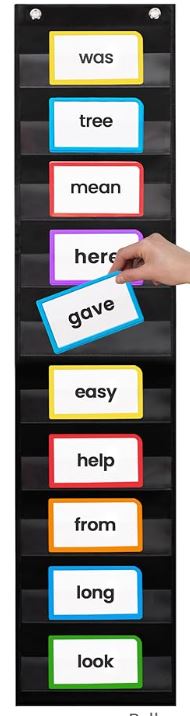
Essex Wares Classroom Pocket Chart

I’m harkening back to my teaching days to recommend this pocket chart. This is a great tool to use for morning or evening routineslist the steps (or better yet, take pictures of your child completing the steps), and when they finish each task, they can turn the card over. Kind of low tech, I know, but that tactile zing one gets when turning over that card is very satisfying! Adults can use it too, it’s great for tasks with a few or several steps that are completed (when we remember) over time – yes, laundry, I’m looking at you! https://amzn.to/3zKojwq

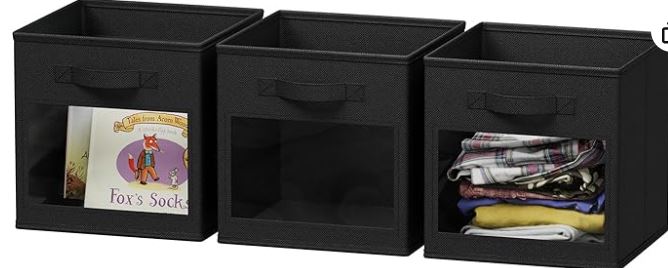
Storage Cubes with Windows and Hooks

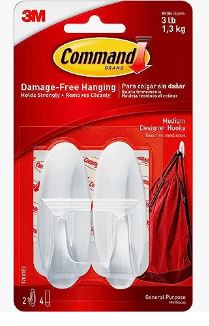
And speaking of laundry…it’s possibly the biggest challenge I come across the most with my clients. Hate doing it, hate starting it, can’t move clothes from washer to dryer….and the biggest issue, putting the clothes away. I’m a big believer in making the system work for you, not the other way around. So, two ideas: first, put hooks in your closet, and use them for items that you’d like hung up, but loathe the thought of putting them on hangers. And second, does everything need to be folded? Nope! Underwear, socks, maybe tee shirts and workout clothes, can all just be tossed into one of these fabulous storage cubes. The window lets you see what lives there. It also enables a heads up as to when you are running out of underwear.  https://amzn.to/4cIbAJp https://amzn.to/3LohhAb

Weewooday Cube 15-20-30-60 Flip Timer

A fun variation on the kitchen timer, this flip cube gives you four minute options. Just flip it to the time you want, and off it goes. Great for “Can I have 15 more minutes, Mom?” as well as “I need to leave in 30 minutes.” Comes in several colors, I just like the pink 🙂  https://amzn.to/4f5Tker

Kick Bands

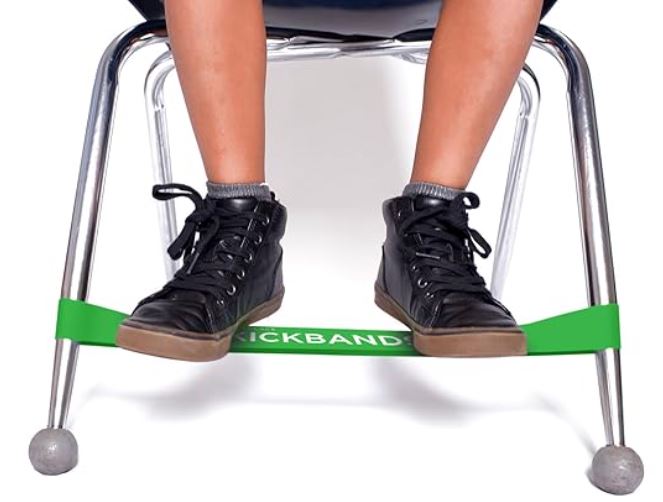
These bands are awesome for kids – and adults – who are more focused when they are performing some type of movement (studies have shown this to be an effective strategy for ADHDers). Simply place the band around the legs of any chair, and you’ve created a spot for quiet, unobtrusive foot bouncing. These have been used in classrooms for ages. Is it time to get some for homework time? Or meal times? https://amzn.to/3xPYb2O 

Blue Ginkgo Multipurpose Caddy Organizer

While it’s helpful for your child to have a specific area in which to do homework (or for you to have a home office that you can use consistently), there are times when a refresh can be helpful (she says as she types this in her husband’s office). Having the basic supplies in a caddy that can be carried easily makes that transition from the bedroom to the kitchen table quick and painless…with less time to get distracted. https://amzn.to/4d3lyVn

Paperage Lined Journal Notebook
Last but not least, a reasonably priced lined notebook. This can be used for…anything, really. A bullet journal, to do list, doodling space, gratitude journal, meeting notes. I have one that I use as a gratitude journal, and one that I use as my brain dump, a parking lot for everything in my head until I move it to my more actionable task app. Comes in tons of colors, the paper is smooth, and at this price, no guilt if you change up your task management plan. https://amzn.to/3xZg8f9 

What items do you find are indispensable? I’d love to hear from you!

Disclosure: I am an Amazon Associate, and have an affiliate relationship with Amazon.

Food For Thought….About Food

Food and eating – a big topic during ADHD coaching sessions.

The questions about eating run the gamut – from looking for information about what foods positively, or negatively, impact ADHD, to addressing supplement use to mitigate ADHD symptoms in place of medication, to impulsivity with eating. There are also issues around food, like ADHD kiddos being unable to sit at the dinner table, or children raiding the snack cabinet at 4am.

Food is a big part of our lives. And having ADHD can add an entire layer of challenges and questions.

Here’s the thing: having grown up with what today would quite possibly be diagnosed as disordered eating, I am well aware of how careful we must be when addressing challenges relating to food. The last thing we want is for our kids-or ourselves-to feel bad or wrong because appetites spike when meds wear off, or because the sensory issues that often accompany ADHD makes the thought of eating eggs akin to torture.

I don’t want to mess this up. So, I called in the experts.

I worked with a very helpful and knowledgeable registered dietitian  (by the way, do you know the difference between a dietitian and a nutritionist? I do now!), to develop a list of questions to gauge dietitians’ general philosophies on food and body image, and their experiences with neurodivergent populations, with specific attention to ADHD and concurrent eating issues.

I am happy to say that the dietitians whom I contacted were very eager to chat with me, to discuss their views on food, diet, body image, ADHD, and sensory challenges, and to use their expertise and experience with neurodivergent folks to aid struggling ADHDers with navigating their eating journeys. These professionals brought a new perspective that was really interesting, and would be so helpful for ADHDers dealing with eating related challenges.

I am including their names and contact information below.

If you are interested in doing your own research to find a registered dietician that can meet your particular needs, including being ADHD informed, or is local to you, I’d be happy to share my question list with you. Just reach out!

Help is out there if you or your child is struggling with food related challenges, including those that are connected to ADHD. I strongly suggest calling in the experts, and getting the professional support you need, and deserve.

Registered Dietitians:

Tracy Colin, MS, RD
My Food, My Choice LLC
https://myfoodmychoicenutrition.com
tracy@myfoodmychoicenutrition.com
848-228-2046

Eliza Hiberlein, RDN
https://www.elizaheberleinrd.com/
ElizaHeberlein@elizaheberleinrd.com
732-978-9137

Andie Schwartz, M.ED, RDN, CLC, CSCS, NCSA-CPT. RYT
ABS Nutrition and Fitness
https://www.absnutritionandfitness.com/
andie@absnutritionandfitness.com
856-292-5355

Stephanie Van’t Zelfden, RDN, CIEC
Nutrition Hungry
https://www.nutritionhungry.com/
stephanie@nutritionhungry.com
856-320-5100

If You Don’t Know The Basic Science Behind ADHD, You Need to Learn It

When I do an initial intake with a new client, one of the questions I ask is “What would you like to learn about your ADHD?”  It’s a pretty broad question, and most responses center around wanting to learn how to be more productive, or how to organize their lives.

At that point, I ask, “How much do you know about the brain science behind your ADHD?”

The majority say they don’t know anything, or very little. The word dopamine is bandied about a bit. And most surprisingly, when I ask if they would like to know more, most say, “I don’t really need to.”

Oh, but you do. You really, really do.

I’m not talking about becoming a neuropsychologist, or obtaining the knowledge that your psychiatrist has. But having a basic understanding of what physically makes your brain different, and how that impacts your life, is, in my opinion, essential. 

First, it is vital to understand that there are physical differences between the ADHD brain and the neurotypical brain. It is not being lazy, or dumb, or anything behavioral. Comprehending that concept opens up an entire world for those of you who have been chastising yourselves about not trying harder. Or just not getting over it.

Would you berate yourself because you haven’t tried harder to see better, if you are a glasses wearer? Of course not. And just because this is a brain related disorder does not make it any less physical.

Repeat that to yourself a few times.

Secondly, I’m not sure how one can make a well informed decision about symptom management if they don’t understand what is causing the symptoms to begin with.

Let’s take an example from my running life. Let’s say I have a pain in my knee. In order to decide how to handle that, (Rest? Ice? New running shoes? Surgery?) I need to understand what may have happened that resulted in this pain before I can decide what I need to do next.

With ADHD, having a working comprehension of what is causing symptoms can help us to make solid treatment decisions. Knowing that my brain has lower dopamine might lead me to use medication to offset that. Understanding that the areas of my brain that control my emotional responses are different than those belonging to neurotypicals might convince me to try meditation to help with regulating my responses.

Deciding on one’s symptom management without having a basic understanding of what is causing the symptoms is like wearing a bikini on a sunny day…in February. You just don’t have all the facts to make an informed decision.

Finally, having a basic working knowledge of how your brain is different enables you to set up your life in ways that support you.

Dopamine low? Let’s make things more fun to get us going! Executive functions negatively impacted? Maybe an accountability buddy or group can help keep us on track. Fight or flight activated quickly? Perhaps I need to let my significant other know this can happen.

I don’t mean to imply that the ADHD brain is wrong, or broken, or just not effective. Not at all. But it IS different. And providing yourself with that knowledge is a gift of self awareness, and part of the ADHD toolbox for living your best life.

How Body Doubling Is Changing My Life!

That sounds awfully dramatic, doesn’t it? But it’s the truth!

I have a project that has been sitting on my back burner for so long, it’s blending in with the decor. It’s a terrific project, a great idea, something that, if I can get it off the ground,will enable me to help people make major positive changes in their lives…

But, there it sits.

And the thing is, I already started it, awhile back. So it’s not about starting this project, and feeling overwhelmed. It’s about starting AGAIN.

It’s that same feeling you get when you’ve been going to the gym consistently, and then life happens, and you miss one workout, and another, and another. It’s almost harder to go BACK to the gym than it was to start in the first place.

What’s up with that?

When we are starting something new, there’s excitement. There’s anticipation. Using the gym example, there are so many possibilities-feeling great, looking chiseled, meeting new people.

But that excitement isn’t really there when we go BACK to something we’ve done in the recent past. Sure, we know it’s a good idea, we looked and felt much better when we were working out often, but it’s really hard to drum up that “new” feeling that kicks our enthusiasm-and our dopamine-up several notches.

And that’s exactly what I have run into with my project. I know it’s a great idea, but I also can’t garner that “Yahoo!” feeling. The newness isn’t there. Plus I also know about the downside-that I actually have to do work to make it happen!

Enter body doubling. Body doubling is when we work alongside someone, as opposed to with them. It is a great way to keep working-you’re not going to start playing on your phone when you’ve committed to working and your body double can see you. So it works fantastically well for distractions.

But as an incentive to start a task? Yup!

A friend offered to body double with me while I work on this project. She had some work to do as well, so we would both benefit.

And suddenly, the newness was there! I was going to work with my friend! And be able to share my progress! 

This new twist made all the difference.

So far, we’ve body doubled once, and now, I’m working away on my project even when she’s not around, so I can tell her how far I’ve come since I saw her last. Accountability is built into the process, along with having a work buddy.

Now, there is actually hope of completing this project in the foreseeable future, which could really be a game changer for me, and others. 

The project is off the back burner. In fact-it’s got a hell of a fire under it. Thanks to body doubling.

If you are interested in body doubling with me, you can register for my weekly Monday afternoon sessions-FREE! Here’s the link:  https://calendly.com/constellationadhdcoach/body-doubling

The Holiday Gift of Letting Yourself Off the Hook

We are in the midst of the holiday season-which, by the way, seems to have started in September, but I digress-and with every gift we purchase, every party we attend, many of us can’t help just raining down criticism. On ourselves.

“They’re going to know I didn’t spend a lot. Why didn’t I save more for gifts? Why can’t I control my finances? What is wrong with me??

“If I could only get organized, I wouldn’t be shopping at the last minute. I’m just a mess!

“I can see that they hate my gift. If I could only pay attention better, I would’ve had a clearer idea of what to get them. They must think I just don’t care!

And on. And on. And on.

It’s not just ADHDers who have this anti-self patter reverberating in our brains-neurotypicals are prone to it as well, especially during high pressure moments. But for ADHDers, the negativity is often a way of life, with negative messages shooting like arrows at them since their youth.

How about giving yourself a little gift this holiday season? How about letting yourself off the hook?

When you start to think, “wow, I just suck,” how about a little self compassion? 

So you didn’t save more for gifts. Okay, maybe that’s something to work on. But the fact is-you’re giving gifts. Which is a really nice thing to do.

You’re shopping last minute. But hey-you’re getting some great markdowns!

They might not like your gift. But you did give something-again, very nice. Next time, maybe a gift card?

You get the idea.

And while you’re at it-maybe let your spouse, children, or parents off the hook, just for a bit.

It might be the best gift you ever give to them, or to yourself.

Merry Christmas, Happy Kwanzaa, and Happy 2024!!

I Use Multiple Task Management Systems Simultaneously, And It Works For Me

A common joke amongst ADHDers is, when some well meaning but misinformed soul says, “All you need is a planner/bullet journal/to-do list app,” the response is “OMG, I’m cured! Thank you!!” Cue laughter.

Many folks with ADHD have tried a variety of task management strategies and systems. Whether it’s handwritten or online, ever hopeful folks with executive function challenges sample these systems, reading articles and purchasing apps. And it may work-for about two weeks. That’s when the newness wears off, and the planner is chucked in a corner, ultimately collecting dust.

This is not a judgment of anyone, ADHDer or otherwise, who does not stick with a particular task management system – I personally have many, many apps and journals that didn’t last. But I will say this:  if we know that the ADHD brain is interest based, and is going to pursue the new and exciting option, and will eschew something that has lost its luster, we need to work with that.

Enter my Many Systems System.

I use a variety of systems and tools to keep track of my tasks, and to get them done. And while there is some method to my madness, a lot of it is driven by my mood. Yup, I said it-my mood.

I use Todoist as my main task management system. It works well for me, as I’m able to schedule the many repeating tasks that are part of my coaching business-prepping for sessions, writing summaries, and reconciling my bank account.

But I don’t just use Todoist. For example, sometimes something will pop into my head-let’s say “get my oil changed.” Now if I was Todoist only, I’d stop what I was doing, and put this task into my app, perhaps in the “Inbox” section, which is kind of the brain dump area. 

But sometimes, it’s easier to  just write it on a Post-It note-or more fun (there are some very cute Post-Its). Or I’ll tell Siri to remind me at 4pm to call the mechanic and make an appointment. Or I might just make it a Google Task, and pop it into a specific day on my Google Calendar. Or I have an app called “Quicky Sticky” on my phone, which is basically a virtual Post-It-also a good place to jot something down. Whatever floats my boat in the moment.

If I have a task that I KNOW I will avoid, I put it into my Due app. Due will remind me of a task over and over, all day and night, until I either move it, or do it. So for things like “give the dog the flea and tick meds she hates,” Due is my go to. It is a silent but forceful nag.

Then there are the days that I have a lot to do, and  I feel overwhelmed.  On those days I like to write all of my to-do’s for that day on actual paper, and cross them off as I complete them. “But aren’t your tasks on Todoist? Isn’t this a waste of time and effort?” Yes, there is something less efficient in doing this. However, if writing it all down on paper helps me to feel less anxious, and allows me to get that “Zing!” from crossing off tasks, it’s worth it to me.

So, in case you are counting, I actively employ six apps, and two written methods-all being used simultaneously. 

Now you might wonder if this gets confusing. Honestly-no, it doesn’t. There are a couple of practices that I’ve learned over time to help. First, tasks on apps all have reminders attached to them. This way, no matter where I’ve put the task, it will pop up. Also, I take two minutes at the end of every day putting any written to-dos, and those on Quicky Sticky, into Todoist or Due, so that they too are residing on my phone, with a reminder.
Having a Many Systems System can take some getting used to. But one thing for sure-I never get bored. And that means abandoning my task management system doesn’t happen very often. Which helps me to stay on task much more consistently. And that’s the goal, right?

The One Hack You’re Probably Ignoring To Get Things Done

ADHDers don’t just love novelty – they need novelty. If something isn’t interesting, or new, or about to burst into flames, it’s just not on the ADHDer radar.

So when boring tasks need to be tackled-folding laundry, sending thank you notes, responding to emails, paying bills-the neurodivergent ADHD mind says “No thank you. That is incredibly dull, so I’ll just ignore it.” Which can cause a whole big set of problems.

The solution is to turn boring jobs into…less boring jobs. Finding ways to have cleaning the kitchen become even the slightest bit enticing. Because once we start, we most likely will keep going, right? 

There are many ways to add some spice to tedious chores. Put on music. Watch TV. Listen to an audiobook or podcast. Promise yourself you will work for five minutes and then take a break.

But there’s one hack that you, as a responsible adult type, are probably turning up your nose at. And you shouldn’t.

It’s gamifying.

“Sure,” you say, “I gamify tasks for my kids all the time. They’re kids though!”

I’m here to say it-gamifying is for adults too. It is the secret sauce that makes an otherwise deadly dull task-dare I say it-fun. Which means you’re more likely to actually do it.

Here are a few ideas on how to gamify grown-up jobs:

Beat the Clock – Set a stopwatch, and see how long it takes you to empty that dishwasher. Write it down, and then see if you can beat it next time. Turn it into a family competition-give those kiddos a reason to help out with chores!

Snowball Fight – can be played alone, or with others. On small strips of paper, write down each task you need to accomplish that day. Crumple each up one, and throw them into the air! Then pick one up, and complete it. And another, and another.

Trashketball – works for anything involving paperwork. When you have read/dealt with any paper, crumple it up and try to toss it into your trash can from a distance. Keep track, and reward yourself after 5 baskets.

Card Catalog – For jobs with several steps, write each step on an index card. Then, write 1-5 prize cards that say “take a break” or “dance to one song” – whatever works for you. Insert the prize cards randomly into the deck, and when you hit one of those cards, follow the directions. The anticipation will keep you going! This is also a fun one for family chores.

“But wait,” you say, “I’m going to feel really silly doing this.”

Yup, you might. But you know what won’t feel silly? Getting things done. That’ll feel great. And I truly believe, we could all use a drop more silliness in our lives.

So get a little goofy. And get that stuff done.