The Emotional Cost of the ADHD Tax

The ADHD tax. Have you heard of it?

Due to executive function challenges, folks with ADHD can lack organizational skills, which can in turn cause them to forget to pay bills. Add time blindness to the mix – “Oh, that’s not due for ages! I’ll worry about it then!” – and working memory issues that impact planning actions, and you have a recipe for the additional costs for goods and services, including late fees and higher borrowing costs due to lowered credit scores, that is semi jokingly referred to as the ADHD tax.

There are other ADHD related factors that impact financial stability. These include impulsivity (buying without forethought), people pleasing (gifts one can’t afford, or purchases to help one fit in or impress), and of course, dopamine seeking (shopping can boost dopamine, tracking one’s money is boring). While these don’t directly lead to the ADHD tax, the less control one has over their money situation, the more apt they are to avoid dealing with it, leading to behaviors that cost us.

If the only impact of the ADHD tax was to our wallets, while it wouldn’t be great, we’d probably just chalk it up to another ADHD problem, like losing our keys or getting lost in a project, and pay the late fees. However, there is more to the ADHD tax than dollars and cents.

The emotional cost associated with feeling financially out of control – for which the ADHD tax is an indicator – can be quite large. According to a 2020 study, ““participants who had difficulty paying bills were more likely to have high levels of depressive symptoms and anxiety compared to those who did not have financial difficulty.”  Per a TIAA February 2024 report, 42% of U.S. adults say that money negatively impacts mental health.

Add ADHD to this witch’s cauldron of financial instability, and the emotional impacts increase. Per a study published by The Guardian, “…those with ADHD are twice as likely (76%) to suffer from anxiety linked to their finances compared with the general population (38%).” And even more alarming, according to a 2020 study by Beauchaine et al, “financial distress is associated with fourfold higher risk of suicide among those with ADHD.”

Suddenly the ADHD tax isn’t even remotely amusing.

You may have experienced the negative emotions that accompany the ADHD tax. Feelings of shame and embarrassment are common. One can feel hopeless – why can’t I manage to pay my bills on time like everyone else? And there can be guilt too, especially if others are impacted. These emotions can become cyclical: shame and guilt leading to avoidance of financial monitoring, or the classic “retail therapy” prescription, which can lead to more spending, which starts the cycle all over again.

So what is one to do about this?

There will be those who tell you “just use a budget app.” They may even tout an ADHD friendly budgeting system. However, that app, without any further accommodations and awareness, will sit on the shelf, gathering dust, while the emotional and monetary costs increase.

There are accommodations that can help autopay, an accountability buddy to keep you from avoiding the issue, dopamine boosting rewards (I’m a fan of the Money Meeting – complete with coffee and cookies – with myself, weekly). If there is avoidance happening, we can dip our toes in by just checking balances for a couple of weeks. If we can afford it, maybe a virtual bookkeeper would help.

But in order for any strategy to work, we need to understand what is driving our behavior. And we need to accept the differences in how ADHD brains work, so that we are willing to stop trying to manage our finances the neurotypical way.

And for this piece of advice…no charge.
I Wish I Had A River To Skate Away On..

It’s coming on Christmas,

They’re cutting down trees,

They’re putting up reindeer, singing songs of joy and peace,

Oh I wish I had a river I could skate away on.

Even Joni Mitchell felt overwhelmed by the holidays (btw, if you’ve never heard her holiday song “River,” go listen to it right now. You’re welcome).

“Overwhelmed? What do you mean? It’s the most wonderful time of the year!!”

Perhaps. But the holidays are a lot. And when you have ADHD, they are a lot of a lot.

For example, getting gifts for people can be so difficult. Analysis paralysis, plus people pleasing, plus lack of financial control, can become a nightmare scenario of buying at the last minute. Add the ADHD tax of having to send gifts via FedEx 24 hour delivery. And the possible future issue of buying gifts without actually knowing how much you can afford, and will have to pay for.

And then there is receiving gifts. “Now how could receiving gifts be a problem?” you say, thinking that I am some sort of Grinch. 

Let’s try a little scenario here.Your mom gets you a sweater. She gets your sister a bracelet. Probably the same monetary value, and you did ask for a sweater. BUT her gift is so much nicer! Mom loves her more! Rejection sensitivity skating on in! 

Or your mom gets you a sweater. But you didn’t ask for a sweater; you asked for gloves. Does your mom not think you know what you need? How can she ignore what you asked for? Let’s have a little emotional dysregulation with those gloves please!

And I cannot leave out the actual holiday celebration. Family, friends…what could go wrong??

If you are fortunate enough to celebrate with your people, your very own chosen tribe…enjoy every minute!

But many of us will be spending the holidays with family from near and far that are not quite so understanding of neurodivergence.  Some of that family may not be very well versed in ADHD – what it is, and what it isn’t. Unbelievably, there are still people who think ADHD is fake – all you, or your ADHD kiddos, need is a kick in the ass.

Getting through dinner with those who deny your issues, and who feel the need to let you know this, is what would send me through the door, looking for any sort of body of water to skate away on.

So, what is one to do? How can an ADHDer have a happy holiday season? Here are just a few tips.

1 – Recognize that the holidays are not necessarily all they are cracked up to be, to eliminate the feeling of FOMO, as well as the idea that you have failed at Christmas. Ignore Facebook and Instagram posts showing perfect trees, happy children, couples kissing under the mistletoe. Real life is not a Hallmark Christmas special! 

2 – For gift buying, if possible, try to figure out how much to spend in total. The more you spend on one person, the less you will have for someone else. This can keep the January regrets – and credit card bills – from ruining the start of 2026.

3 – A gift that someone gives to you is not a linear measure of how they feel about you. It’s a culmination of so many things – what they think you might like, sure, but also what is on sale? What comes in your size? What did they give you last year? How much do they have to spend on gifts? When you start to feel rejection sensitivity relating to a gift you are given, ask yourself if YOUR gifts reflect ONLY how you feel about someone? 

4 – It is okay, if you are feeling overwhelmed or irritated at any point during the holiday festivities, to excuse yourself from the area, and spend some time alone. Splash cold water on your face, take deep breaths, mentally sing a song. You don’t have to be at the table for every single minute of the day.

5 – Likewise, you do NOT have to go to every holiday event to which you are invited. There will be some that feel mandatory, and you may have to weigh the “price” of going versus the “price” of sitting it out. For example, the work Christmas party may be an event you feel you can’t miss. You do not, however, have to stay from start to finish! 

6 – Finally, and perhaps most importantly, give some thought to what YOU would like to have as part of your holiday. Is it binging “Gillmore Girls” while wearing PJ’s and eating ice cream? Do it. Is it Face Timing with your far away nieces and nephews? Do it. Is it making a yummy breakfast for your kids, and then letting them wear sweatpants to Grandma’s house for Christmas lunch, rather than fighting with them? Do it. You can invent your own traditions, or eschew last year’s plans to make new ones this year. Use that fabulous ADHD creativity to create the holiday YOU want.

Whatever makes you feel like you don’t want to skate away on that river…at least, not today.

We Are Under Attack!

Last week, I attended the International Conference on ADHD. It was great to see coaching friends in person, to meet new people, and to learn so many new things. All three keynote speakers were truly inspiring, imparting information and motivation.

One common thread for all three speeches related to the current situation neurodiverse people are facing, due to a variety of policy and personnel changes in the Federal government. In case you are not aware of these challenges, here is a brief summary (if you know the issues, you can head down to the Call To Action):

Department of Education/Office of Special Education: The Trump administration has expressed its intention to close the Department of Education. Since this can only take place through an act of Congress, the Department’s staff is being critically reduced, and plans have been announced to move various departments to other agencies. These actions will hamper oversight of compliance with IDEA (Individuals with Disabilities Education Act), which protects the rights of disabled students. It also can impact administration and protection of Section 504, under which many students with ADHD receive vital accommodations.

Additionally, Office of Special Education staff has been significantly decreased. This endangers distribution of funding for special education programs at schools. There have also been discussions of moving OSEP to the Department of Health and Human Services, which smacks of looking at special education students as being impaired, versus different.

Evidence – Based Care/Treatment of ADHD:  There have been many, many studies on ADHD that show that a multi-modal approach to treatment – medication, therapy, educational and work supports – is the best practice when it comes to addressing ADHD. However, the MAHA commission established by Robert F. Kennedy Jr., has cast doubt on these studies and treatments. MAHA’s approach could impact the availability of medication for ADHD and other mental health challenges, as well as cause issues with insurance coverage for treatments. The shortage of ADHD medication in recent years has been incredibly difficult for those that rely on medication to do their work, drive safely, and live life to the fullest. One can only imagine how reducing access to medication altogether would impact the ADHD community.

Call To Action!

Do the issues summarized above make you anxious? Frustrated? Angry? Is the thought of your child being unable to get their medication, or having difficulties at school because of programs being erased, something that you do not want to stand for?

After listening to the keynote speakers at the conference, I am ready to fight.

There are simple ways to make your opinion known to your Federal representatives. While you may think that this is ineffective, I can tell you, as a former constituent liaison for a state representative, letters, emails, and phone calls are logged. So while every word you write may not matter, just the act of writing does. We need to show our representatives that access to evidence based care and a protective environment for our neurodiverse children matters!

The CHADD Advocacy Center (https://chadd.org/adhd-advocacy-action-center/) is set up for extremely easy access to your representatives. They supply a template for emails on a variety of important topics. When you insert your name and address, your email is automatically routed to your representative. It takes literally two minutes.

I know that having one more task on your plate is exactly what you don’t want. So here are a few strategies to help out:

  • Set an alarm/reminder for a somewhat less busy time during your day.
  • Have Siri/Alexa remind you to “stand up for the rights of ADHDers!”
  • Stack sending emails with another existing habit (“before I brush my teeth I will…”)
  • Hop on the CHADD site while doing something else that you enjoy (“I will listen to this podcast only if I am also contacting my senator!”)
  • Gamify it – how many emails can you send in one week? Set up a contest with a friend or family member. (It is okay to send it over and over, again, numbers matter!
  • Think about your future self – will FutureYou want you to ignore this issue, and leave them without meds??
  • Ponder your values – who do you want to be in relation to this issue? Do you believe that all people are entitled to the assistance that will help them live a good life?

I urge you to not sit on the sidelines. Use that ADHD sense of justice and fairness, and your creativity and compassion, to propel you towards action. For you, for me, for all of us.

Why Does ADHD Awareness Matter?

October is ADHD Awareness Month. You may have received an email about it, or seen a post online. And you may have skipped right over it – after all, YOU are aware that you have ADHD, isn’t that enough? 

Nope. It is not. Let’s go through a quick round up for whom ADHD awareness is extremely important, impacting ADHDers, and neurotypicals.

Teachers and School Administrators – As a retired K-6 educator, I can accurately state that while teachers are aware of ADHD, many have not had appropriate training, and therefore do not have a full understanding of what it is and isn’t, or how to address challenges in the classroom.This is important if you are a parent of an ADHDer, as having your child get the message that they are lazy, incompetent, or even stupid can have life long ill effects on their self esteem. Additionally, if you are requesting accommodations or modifications, it is vital that the school team has a clear picture of what will help your child.

Managers in the workplaceADHDers, with their creativity and ability to think outside the box, can be a real positive force in the workplace. However, they also can have difficulties with organization, and time blindness. This means that any project or responsibility, even simple tasks, can become a struggle to complete on time, or at all. Furthermore, ADHD hyperfocus can be a double edged sword. While being able to dig deep is a plus in any analytical position, getting stuck down a rabbit hole can slow work down without commensurate value. There are simple accommodations that can help with these challenges, such as check-ins with the manager. However, in order to put these supports in place, managers need to recognize that ADHD is real, not just an excuse.

Family members aside from parents – Hopefully, if you are an ADHD parent, having an ADHD kiddo has led you to learn about ADHD, and gain an understanding of the causes of ADHD, as well as how to handle your child’s particular brand (and if not, let’s talk!). However, other family members may not believe that ADHD is real, or may make comments that can cut your child’s ego like a machete. If we believe that family members love our child, and are just misinformed, then sharing more about ADHD can benefit everyone.

Our Government – Currently, the health and science arm of the U.S. government is going through radical changes, and often proffering opinions that are not backed by the majority of scientific research. ADHD has been mentioned in the MAHA literature, with RFK Jr. proposing voluntary attendance at “wellness farms” as a treatment. Perhaps some ADHD awareness, particularly relating to research backed treatment scenarios, would be helpful for the decision makers in Washington.

This is by no means a complete list. My goal is to change your awareness of how sharing accurate information on ADHD can be beneficial to you, your loved ones, and society in general. Knowing about your or your child’s ADHD isn’t enough; we need to spread the word.

So Happy ADHD Awareness Month! Go out there and amplify what YOU know about ADHD, for others!

Crossing the Finish Line With ADHD

Yesterday I went to mile 22-ish to cheer my daughter on at the New York City Marathon (and yes, she did great!!). As I stood on a Manhattan street corner, a sea of runners moved past me. They were all ages, sizes, and all running at different speeds. I saw a woman pushing a man in a wheelchair, and a blind man running with guides. Some people looked like they were out for a relaxed jog, while you could see the pain of every step written on the agonized faces of others.

I found myself studying the runners, looking for clues to connect a runner’s demeanor with…something. Of course, the major factor for all competitive runners is training, which I could not see. But there are other more observable differences. Some runners were running, others were doing a combination of running and walking. There were runners who had doused themselves with water, and were dripping wet, trying to stay cool on a sunny day. Shorts were worn by some; pants by others, with jackets and hats. In other words, each runner had adjusted their pace, and their environment, to their own particular needs.

In my coaching practice, I often come across clients who seem stunned when I suggest making some changes that could make life easier-reminders, alarms, a text from me as their coach-and say “I should be able to do this on my own!” Says who? Your unique brain might need something different from the brain of the guy in the cubicle next door. That doesn’t make you wrong or weak-just different. Being neurodivergent means recognizing this, and honoring it.

Let’s be clear here. The marathon is 26.2 miles, and it is not made shorter for anyone. There might be ways to mitigate those miles – taping your knees, having a great podcast cued up-but you must run each and every mile.

Work and home projects work the same way. Filing your paperwork, or cleaning out your closet, cannot be shortened if you are to bring them to completion. But listening to music, or making a game of cleaning, or body doubling with a friend, can help to support your efforts. Which isn’t cheating-it’s smart.

In the end, I have never heard of someone being disqualified from the marathon because they wore compression socks. As long as they have crossed the finish line, they are marathoners. And no one will say you didn’t send out thank you notes because you rewarded yourself with ice cream when you were done. They’ll probably say “that’s brilliant!”

If You Don’t Know The Basic Science Behind ADHD, You Need to Learn It

When I do an initial intake with a new client, one of the questions I ask is “What would you like to learn about your ADHD?”  It’s a pretty broad question, and most responses center around wanting to learn how to be more productive, or how to organize their lives.

At that point, I ask, “How much do you know about the brain science behind your ADHD?”

The majority say they don’t know anything, or very little. The word dopamine is bandied about a bit. And most surprisingly, when I ask if they would like to know more, most say, “I don’t really need to.”

Oh, but you do. You really, really do.

I’m not talking about becoming a neuropsychologist, or obtaining the knowledge that your psychiatrist has. But having a basic understanding of what physically makes your brain different, and how that impacts your life, is, in my opinion, essential. 

First, it is vital to understand that there are physical differences between the ADHD brain and the neurotypical brain. It is not being lazy, or dumb, or anything behavioral. Comprehending that concept opens up an entire world for those of you who have been chastising yourselves about not trying harder. Or just not getting over it.

Would you berate yourself because you haven’t tried harder to see better, if you are a glasses wearer? Of course not. And just because this is a brain related disorder does not make it any less physical.

Repeat that to yourself a few times.

Secondly, I’m not sure how one can make a well informed decision about symptom management if they don’t understand what is causing the symptoms to begin with.

Let’s take an example from my running life. Let’s say I have a pain in my knee. In order to decide how to handle that, (Rest? Ice? New running shoes? Surgery?) I need to understand what may have happened that resulted in this pain before I can decide what I need to do next.

With ADHD, having a working comprehension of what is causing symptoms can help us to make solid treatment decisions. Knowing that my brain has lower dopamine might lead me to use medication to offset that. Understanding that the areas of my brain that control my emotional responses are different than those belonging to neurotypicals might convince me to try meditation to help with regulating my responses.

Deciding on one’s symptom management without having a basic understanding of what is causing the symptoms is like wearing a bikini on a sunny day…in February. You just don’t have all the facts to make an informed decision.

Finally, having a basic working knowledge of how your brain is different enables you to set up your life in ways that support you.

Dopamine low? Let’s make things more fun to get us going! Executive functions negatively impacted? Maybe an accountability buddy or group can help keep us on track. Fight or flight activated quickly? Perhaps I need to let my significant other know this can happen.

I don’t mean to imply that the ADHD brain is wrong, or broken, or just not effective. Not at all. But it IS different. And providing yourself with that knowledge is a gift of self awareness, and part of the ADHD toolbox for living your best life.

The Pandemic DID Happen. And It’s Still Affecting Your ADHD Kid.

Today is February 29 – Leap Year Day. Since this is a once-every-four-years event, it is natural to look back to four years earlier, and think “what was I doing last Leap Year Day?”

But what we were doing is lost in the significance of what we were about to do. Because two weeks later, our worlds just shut down here in the United States. COVID-19 had come to our shores.

So while I can’t tell you how I spent February 29, 2020, I can tell you that on March 13, 2020, I taught in a classroom for the very last time. We celebrated Pi Day-my colleague and I opting out of serving pie, out of “an abundance of caution.” We left school, with the thought that we’d be back in a few weeks.

Crazy how wrong that was.

But why am I talking about this? Why dwell on what has been the worst collective event that many of us will ever experience? Why not just put it in the past, and move forward into the sunshine?

Because it did happen, even if we want to pretend it didn’t. And the impacts are still being felt among all children today. Even more so for ADHD kids. 

We all know there was substantial learning loss during the pandemic. Online education was something for which teachers weren’t prepared, to which students had difficulty relating (and frequent technological issues), and for which parents had no time-it’s pretty tough to do your job from home, while monitoring whether your kid is actually paying attention to the teacher on the screen. Additionally, many students were tasked with caring for younger siblings while their parents worked in the next room-so getting online wasn’t always possible. It is estimated that academically, students lost the equivalent of 35% of a school year during the pandemic.

However, the learning loss is just a part of this. Let’s talk about the loss in interactions, and the resulting social skills impacted. Not to mention the subsequent mental health challenges children and teens faced. And let’s not forget-people were sick. Very sick. People were dying. Many of our young people were dealing with the loss of loved ones, and the fear that others might be next. 

Familiar routines were upended-and that’s an understatement. Day care centers were closed, grandparents isolated, playdates not allowed. According to The Economist, “The pandemic’s indirect effects on small children could last a lifetime.”¹ Think about it-if a child is 9 now, this hit when they were 5, which is just when kids are learning to be people without their parents telling them how. If a child is 18, they were 14 then, exactly at that middle school point where kids are trying out independence with the safety net of their parents in the background. 

The impact on maturity is seen by teachers daily-and while not unexpected, it is certainly alarming.

And how did ADHD kids fare? In a meta-analysis of 18 studies performed across the globe published by the Journal of Attention Disorders, Emerging research suggests that the Covid-19 pandemic has disproportionately and adversely affected children with Attention-Deficit/Hyperactivity Disorder (ADHD).”² This included decreases in motivation and focus, and increases in social isolation and emotional dysregulation. 

One study published in the Journal of Pediatric Nursing suggests that ADHD kids were less likely to participate in crafts projects and other non-screen activities at home (including homework) than their non-ADHD peers. According to the study, ADHD kids played video games 22.5% more than their neurotypical buddies, and participated in socializing via technology 40.7% less than their peers.³ 

So what does this mean for today? It means that all kids were impacted by the lack of socialization that took place during the pandemic. And all kids are behind, both academically and socially.

And it also means that the effect on ADHD kids was greater. And ADHD kids are already 25% behind in terms of their emotional development. So this puts them in an even more disadvantageous position.

We need to get our heads out of the sand. We need to understand that our ADHD children could be even more than the 2-3 years behind their peers that we already know about. We need to stop thinking about pushing children with ADHD to get to that neurotypical bar, and instead, meet them where they are at.

We need to support our kids. Because we love them. And if that means accepting that our 17 year old may in fact have the maturity of a 13 year old, and we need to be there for them a bit longer, then that’s what we need to do.

We don’t have to live in the past. But we do have to acknowledge its impact on the present. And the future.

¹”The pandemic’s indirect effects on small children could last a lifetime,” The Economist, December 15, 2022.

²Rogers, M., and MacLean, J., “ADHD Symptoms Increased During the Covid-19 Pandemic: A Meta-Analysis.” Journal of Attention Disorders, Vol. 27, Iss. 8, March 6, 2023.

³Kara, O.K., et al, “The long-term impact of the COVID-19 pandemic on children with ADHD in terms of participation,support,and barriers at home.” Journal of Pediatric Nursing, March, 2023.

How Body Doubling Is Changing My Life!

That sounds awfully dramatic, doesn’t it? But it’s the truth!

I have a project that has been sitting on my back burner for so long, it’s blending in with the decor. It’s a terrific project, a great idea, something that, if I can get it off the ground,will enable me to help people make major positive changes in their lives…

But, there it sits.

And the thing is, I already started it, awhile back. So it’s not about starting this project, and feeling overwhelmed. It’s about starting AGAIN.

It’s that same feeling you get when you’ve been going to the gym consistently, and then life happens, and you miss one workout, and another, and another. It’s almost harder to go BACK to the gym than it was to start in the first place.

What’s up with that?

When we are starting something new, there’s excitement. There’s anticipation. Using the gym example, there are so many possibilities-feeling great, looking chiseled, meeting new people.

But that excitement isn’t really there when we go BACK to something we’ve done in the recent past. Sure, we know it’s a good idea, we looked and felt much better when we were working out often, but it’s really hard to drum up that “new” feeling that kicks our enthusiasm-and our dopamine-up several notches.

And that’s exactly what I have run into with my project. I know it’s a great idea, but I also can’t garner that “Yahoo!” feeling. The newness isn’t there. Plus I also know about the downside-that I actually have to do work to make it happen!

Enter body doubling. Body doubling is when we work alongside someone, as opposed to with them. It is a great way to keep working-you’re not going to start playing on your phone when you’ve committed to working and your body double can see you. So it works fantastically well for distractions.

But as an incentive to start a task? Yup!

A friend offered to body double with me while I work on this project. She had some work to do as well, so we would both benefit.

And suddenly, the newness was there! I was going to work with my friend! And be able to share my progress! 

This new twist made all the difference.

So far, we’ve body doubled once, and now, I’m working away on my project even when she’s not around, so I can tell her how far I’ve come since I saw her last. Accountability is built into the process, along with having a work buddy.

Now, there is actually hope of completing this project in the foreseeable future, which could really be a game changer for me, and others. 

The project is off the back burner. In fact-it’s got a hell of a fire under it. Thanks to body doubling.

If you are interested in body doubling with me, you can register for my weekly Monday afternoon sessions-FREE! Here’s the link:  https://calendly.com/constellationadhdcoach/body-doubling

ADHD Books That I Love!

As promised, here is a list of some of my favorite ADHD books, just in time for Prime Days on July 11 and 12. Here we go!

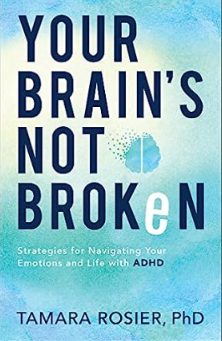
Your Brain’s Not BrokenTamara Rosier

If you are only going to buy one book from my recommendations, this would be the one I would say is a must. I have been fortunate enough to attend a few webinars held by Tamara Rosier, so I was excited to read her book-and it did not disappoint! Your Brain’s Not Broken has user-friendly explanations of ADHD brain differences, including examples. Additionally, the strategies presented, which take the emotional dysregulation ADHDers can experience fully into account, are explained so well that they can be put into action quickly and easily.

What I love about this book: I love everything about Your Brain’s Not Broken! First of all, the notion of motivation being determined by emotions is so thought provoking; it makes so much sense, but this is the first time I’m seeing it spelled out so clearly. Also, Rosier’s presentation of different clients, and her own ADHD, makes this book so relatable. I couldn’t put it down! https://amzn.to/3NF0YzH

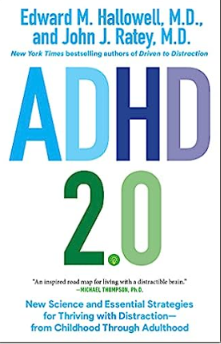
ADHD 2.0 – Edward M. Hallowell and John J. Ratey

Dr. Hallowell could be called one of the Grand Poobahs of ADHD research, treatment, and writing. ADHD 2.0 is an update to Hallowell’s original book, Driven to Distraction, which was (and still is) the ADHD bible. ADHD 2.0, in addition to explaining the brain science behind ADHD, also discusses different ways to enable ADHDers to thrive (such as exercise and connecting with others).

What I love about this book:  Dr. Hallowell’s approach is strengths based, meaning that rather than focus on what one has difficulty with, ADHDers are encouraged to lean on what they are great at. Dr. Hallowell is such a positive force in ADHD treatment, and that shines through in ADHD 2.0. https://amzn.to/44EculN

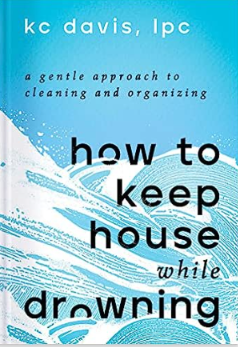
how to keep house while drowningKC Davis

This book, and the YouTube and TikTok videos that KC Davis has created, are legendary among ADHDers. Ms. Davis has developed Struggle Care, a very basic plan for keeping your house in some form of order, based on the (very true) concept that having a messy house is not a moral failure, it is simply a functional challenge. how to keep house while drowning has suggestions for housekeeping that take into account ADHD, depression, anxiety, postpartum…basically, life. You can use the 31 day plan that is presented, or just read through and choose what you’d like to work on.

What I love about this book:  Throughout how to keep house while drowning, one feels like you are sitting and schmoozing with a friend who is telling you that it’s all going to be okay, and that you’re being too hard on yourself. It’s a comforting little booklet. https://amzn.to/46EJfAY

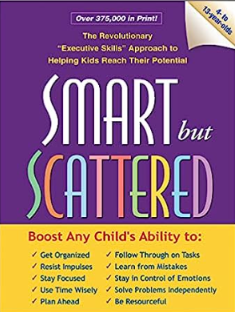
Smart But ScatteredPeg Dawson and Richard Guare

Smart But Scattered is a great book for parents who are looking for practical advice on how to help their ADHD child work with their challenged executive functions. There is a terrific explanation of what the executive functions are, with examples. A section on general strategies to employ when dealing with your child follows. Finally, there are suggestions (with implementation plans) and examples relating to a variety of issues that any ADHD parent will recognize.

What I love about this book: The approach that is presented in Smart But Scattered towards working with your ADHD child is on point. Dawson and Guare tell parents to “modify tasks to match your child’s capacity to exert effort,” and “begin by changing things outside the child before…strategies that require the child to change.” In other words, work with your child, not against them. Doesn’t sound terribly profound…but it is. https://amzn.to/3O4zUuR

All Dogs Have ADHD – Kathy Hoopmann

All Dogs Have ADHD is a picture book full of dogs doing, well, dog things. But what makes this book special is that the pictures tell the story of ADHD. So, a dog jumping into a lake is “diving straight into a situation without thinking about the consequences.” You get the idea. This book is great for kids who have ADHD, and also those who don’t, but spend time around ADHDers. The photographs are beautiful, and the pups are adorable.

What I love about this book: Parents often want to sugarcoat for their kids. All Dogs Have ADHD doesn’t do that-while the book does end on a very positive note, the positives and negatives are given equal time. Also…dogs. Need I say more?? (PS-there is a companion book, All Cats Are On The Autism Spectrum) https://amzn.to/46RhntE

I could go on and on..but I’ll save some of my faves for another post down the road. Happy Reading!!

Disclosure: I am an Amazon associate, and have an affiliate relationship with Amazon.

Strategies To Lean On During The Stimulant Shortage

If you have not been hit by the shortages of stimulant medication, consider yourself lucky. Maybe even blessed.

On various forums and FB groups, I’m seeing posts from people who haven’t had their medication in weeks, or months. People calling around to different pharmacies, and in doing so, feeling like (and sometimes being treated like) a drug seeker. 

And no one knows when this will end.

While some ADHDers have switched medications to one that is, at least currently, not in short supply, that doesn’t work for everyone. Some medications just aren’t the right medication for everyone; add to that the insurance barrier, and you have people who are truly not living their best lives right now-and even worse than that.

Here are some strategies that, while totally not replacing your medication, can mitigate some of the loss in focus, regulation, and organization that you might be feeling.

1 – Recognize that your life is being impacted. Because of society’s often dismissive attitude towards ADHD, it’s easy to fall into the “I shouldn’t need this medication to function anyway.” ADHD is a result of neurological and brain chemistry differences that cause issues with task management, time management, attention, and emotional regulation. It is not a choice. These challenges are mitigated by medication, just like vision issues are mitigated by glasses.

2 – Lean hard on lists, calendars, Post It notes, reminders. Even if these have not worked in the past, at this point they are what you have. If you need to write a giant list of your morning routine to post on your bathroom mirror, do it. If you need Alexa to ping you every 10 minutes to make sure you’re on task, do it. Using a calendar, task management system, and bullet journal? That’s fine. What might seem like overkill when you’re medicated is actually a failsafe system during this emergency.

3 – Automate as much as you can. This is actually a great strategy even when you can get your medication. Auto refill on meds (yours, family, pets), auto pay on bills, anything that can become something that you don’t have to remember is a good thing.

4 – Make sure you are getting the right food and sleep. Having protein at breakfast is crucial! It’s brain food! Your ADHD brain might crave sugar, but that will cause a crash that you will have a hard time bouncing back from without your meds. Also, getting the right amount of sleep for you is super important. You might have a difficult time falling asleep; think about what might help you to have more success (sleep routine, putting screens away earlier, reading before bed…just a few suggestions!)

5 – Exercise! Studies have shown that exercise is an important part of an ADHD treatment plan, whether medication is involved or not. Going for a walk, jumping jacks, yoga, a YouTube exercise video, dancing to music in your kitchen-anything that gets you moving is going to provide dopamine to your system. I cannot stress enough how important this is.

6 – Try body doubling. Body doubling is working on something while someone else is also working. You do not need to interact, or be working on the same project or assignment. For example, I can be paying my bills, while you fold the laundry. This strategy is very effective in eliminating procrastination and increasing on-task behavior. If you don’t have someone you can body double with, you can use a body doubling website (Focusmate.com is a good one), and be set up with someone with whom to work in tandem.

7 – Lean on your support system shamelessly. If you have an understanding spouse, parent, friend, ask them if they can help you out during this crisis. They might be able to insert some accountability into your task plan (a text asking if you’ve done something), to help keep you on track (and If you don’t have an understanding person in your life, well, that’s a topic for another blog post).

8 – Realize that you will not be able to attend to everything at the same level as you did while you were medicated. Decide where your focus should be. If it’s work, then let the housecleaning slide. If it’s taking care of your kids, then maybe order in for a while instead of meal prepping. In other words, expend your energy wisely.

9 – Be extra cautious while driving. Research shows that adults with ADHD are more likely to have car accidents than adults without ADHD. While stimulant medication can mitigate some of the danger, when you can’t get your meds, you are at risk. Take a breath before you start the car to get centered. Put your phone in the trunk. Shut off the radio. If you have a passenger and their conversation is distracting you, ask them to stop talking-I think they’ll be less offended if you tell them it could save their lives.

10 – Keep up with your appointments with mental health professionals, and let them know if you are struggling. You might be able to try a different medication. Your therapist might be able to give you some ideas for dealing with the anxiety that this can cause. 

It can be very discouraging and frustrating to be unable to get your medication, something that enables you to live your best life. You might feel sad, angry, scared-these are all valid feelings when you don’t feel like you are in control. Don’t let anyone tell you that “it’s no big deal.” It IS a big deal-but by adopting some of the strategies above, you may be able to move through this crisis with a little more ease.