When Chaos Erupts

Earlier this week I tripped, fell down the stairs, and fractured a bone in my ankle. I’m in a walking boot, which is way better than the crutches with which I was released from the ER.

Suddenly, everything is just a damn mess! I can’t drive, so every activity has to be recalibrated, postponed, or cancelled. I have new appointments with doctors to address the problem. And worst of all, at least for me – all of my routines are just shot.

It can be so difficult to establish routines, especially with ADHD. But once in place, routines become the anchors to our days. We feel organized and capable, which in turn leads to more organization, and more confidence. Structures and routines help to keep us from hours long rabbit hole searches, late night social media scrolling, midday naps. If I have a post lunch routine of making a cold brewed coffee and stretching, those actions send a signal to my brain that says “time to get to work.” Without the signal it’s a lot harder.

And now? My anchors are gone, and the ship is sinking!  But before I’m completely underwater, I’m trying to regroup. Here are some of the strategies I’ve discovered and leaned on in the past week:

1 – Take a small piece of your routine and try to save it. Part of my morning routine is making my bed. Looking at a messy unmade bed all day would serve as a reminder that I’m hanging on by a thread. I decided to save this part of my mornings.  So yesterday, I crawled around on my bed, getting it made. Holding onto something from your routines feels like an accomplishment (dopamine!) and will also make it easier to get back to them when the crisis is over.

2 – Find something that is a close substitute for a part of your routine you have to give up. Obviously, I can’t go running. But exercise is important for my physical and mental health. So today, I did a 30 minute seated upper body and core routine. Feeling good about doing what I can do, instead of focusing on what I can’t, and being proud of myself for taking action gave me a nice dopamine hit!. Use that ADHD creativity to find substitutions for what’s missing in your routines!

3 – Sit with your upset feelings. Whatever is driving the chaotic turn of events in your life, there will be activities that will be postponed or cancelled, people that you might not see, and possibly other disappointments. This can bring on feelings of frustration, sadness, anger – and as we know, emotional regulation is a challenge for ADHDers. However, I’m going to suggest that instead of squelching these negative emotions, we should attempt to just exist alongside them. Trying to push them away actually gives them strength and longevity. In the words of the late Dan Fogelberg, “Love if you can, cry if you have to, be who you must, that’s a part of the plan.” Did my frustration at EVERYTHING make me cry? You betcha! But that’s okay.

4 – Practice self compassion. The upside down of your life may be associated with one or some of your actions. Mistakes happen. You are human. Beating yourself up does not change the outcome. In fact, having compassion for yourself will enable you to bounce back from this downward trajectory much more quickly. Forgive yourself.

5 – Develop gratitude. Breaking my ankle, in a word, sucks. I’m no longer training for the NYC Marathon; I can’t even drive to a friend’s house. However, I am grateful for my doctor, my husband (a nurse extraordinaire!), the fact that it’s only a small fracture, and that my doctor thinks I’ll be fine by the end of the summer. All of this, big or small, is a reminder that although my day to day life is pretty messed up right now, I do have some great things and people to be thankful for. PS – if you don’t have a regular gratitude practice, think about starting one – it’s truly a game changer!

These are strategies that I’m putting in place. There may be more as the days roll on. But one thing for sure – my bed WILL be made.

The Power of “Job Talk” For Adults

After many years of on and off cigarette smoking, I was finally able to quit for good in February 2017. At the same time, I began running, and actually ran, and finished, my first half marathon in October 2017. Running was just something I did – not that  important, except when training for a race.

Fast forward a few years, to a long overdue check up. As the nurse took my pulse, she looked puzzled. She took it again, and shaking her head, said “your pulse is so low for someone your age.” At which point, I said, “I’m a long distance runner,” and it all suddenly made sense.

Just saying those words, “I’m a long distance runner,” changed so much for me. This isn’t just something I do, it’s part of who I am. Just thinking about that, on days I want to roll over and go back to sleep instead of putting in 8 miles, gets me to push off the covers and get moving.

And when runs, or races, don’t go the way I hope, it’s easier to deal with, because ups and downs are part of being a runner. The longevity implied by being, rather than doing, allows for success and failure, along a continuum.

Many – MANY – ADHDers struggle with task initiation, procrastination, and task avoidance. While this can be attributed, in part, to weak executive functions, and can, in part, be supported by a variety of strategies, there is also the cyclical shame and anxiety associated with these challenges. We can’t get started, so our work might be late or not as solid as it could be, which causes anxiety (“What if I can’t ever get this done?” shame (“I should be able to do this, why can’t I??”). Who wants to go through that over and over? Isn’t avoidance easier? (Ultimately we know the answer to that is no, but in the moment, that avoidance of shame and guilt is all we can handle).

How about approaching tasks slightly differently?

Kristen Jacobsen CCC/SLP, and Sarah Ward CCC/SLP propose using what they call “job talk” with kids. Rather than “Write this essay,” they suggest the declarative “We are essay writers,” claiming that using this format helps to activate non-verbal working memory and procedural memory, creates structure, and limits emotional reactions. Research has also been conducted on adult responses. When comparing reactions between “being a voter” (personal identity) and “voting” (behavior),it was found that the personal-identity phrasing significantly increased interest in registering to vote.

So how do you put this into action? 

You can be very broad about this, as I was with “I am a long distance runner.” However, if starting on a specific task is alluding to you, that can be the basis of your statement. “I am a job searcher,” “I am a kitchen organizer,” “I am a proposal writer.” Does that feel different to you? Do you start to imagine what that means? Prior thinking about your role is a mental dress rehearsal, which is a very powerful tool.

So – be a job talker today. And I’ll be a long distance runner. Let’s see how far we can get.

PS – Next post – calling tasks what they really are…to us (bad language included).

Resources:

Bryan, C. J., G. M. Walton, T. Rogers, and C. S. Dweck. “Motivating Voter Turnout by Invoking the Sense of Self.” Proceedings of The National Academy of Sciences 108.31 (2011).

Kristen Jacobsen and Sarah Ward. “360 Thinking: Breakthrough Strategies to Develop Independent Executive Function Skills.” (2023).

No Summer Slide For Executive Functions!

In the words of Alice Cooper:

School’s out for summer,

School’s out forever.

I’m bored to pieces.

Before you hear that chorus of “Mom, what should I do? I don’t have anything to do. Tell my brother/sister to stop hitting me!” or you just surrender to letting the kids go on their iPads for eight hours, here are a few fun activities that in addition to keeping your kids occupied, will give them some great executive function practice (Ssshhhh! Don’t tell them this!) Note: these activities are designed for you or another adult to do with your child, in order to keep the task structured. Over time, your child may learn to structure these activities on their own.

Planning an outing – this could be anything from a trip to the ice cream shop, to a day at the beach, to a weekend at a hotel. Starting from the end goal, determine what steps are needed to get there (for example, going to the ice cream shop requires money and transportation; you need to know when you are going, how to get there, who is going and extending invitations to those who are not part of the planning, and what kind of ice cream you would like to get). Writing the steps is great practice for planning school projects and homework! More complex outings will require more planning; perhaps divide this up if you have more than one child involved. Executive functions utilized:  planning, organization, time management, working memory, emotional control, sustained attention, goal directed persistence, flexibility.

Cooking/Baking – Following a recipe is a great way to exercise the executive functions. And bonus! Math skills! The steps are already determined, but gathering ingredients and utensils, working with a timer (if necessary), deciding how much to make (doubling or halving definitely uses math), what size serving dish or bowls are needed – all of these can help your child use their executive function muscles. And think about the self esteem boost that comes from completing something delicious! Executive functions utilized: planning, organization, time management, working memory, emotional control, sustained attention, goal directed persistence, flexibility.

Crafts – there are so many different crafts, I couldn’t begin to list them all here. Crafting involves having a vision of what you would like the end result to be, and then determining the steps and materials that are needed to get there. So for example, if your child wanted to create a painting (assuming they have paint in the house), they would first have to decide what they would like their painting to look like. Planning backwards (and again, writing the tasks down), the steps would include putting on a smock, finding paper, paints, brushes and water, spreading newspaper on the table for spills, perhaps drawing the picture first, painting, and then cleaning up. After that, they can gather the materials (discussing these first is also good planning practice) and follow the steps to create their own Mona Lisa!  Executive functions utilized: planning, organization, time management, working memory, emotional control, sustained attention, goal directed persistence, flexibility.

These are just a few examples of how your child can continue their executive function development over the summer. So next time your child is “bored to pieces,” pull out that recipe book or paintbrush, and give those executive functions some exercise!

My Prime Days Picks For ADHDers!

Prime Days are here! (July 16 and 17). Here are some products that I think are great for ADHDers and people with executive function struggles. Many are kid related – back to school is not too far away – but a few are for adults and/or kids. Happy Shopping!

POPRUN Magnetic Weekly Dry Erase Calendar

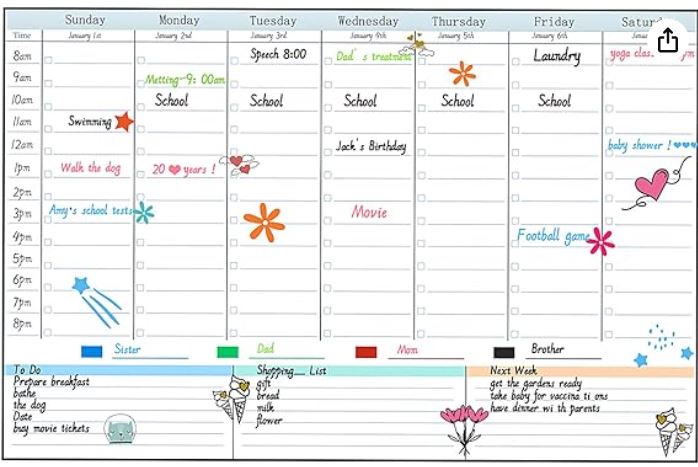
What makes this particular dry erase calendar a favorite? I love that you can write in the times of day on the left side. This enables you, and your family, to see exactly how the day will look. Dentist from 3pm to 4pm? It’ll be blocked out. White space? Ah, that’s free time! Helping those with time blindness actually see time is such a benefit. https://amzn.to/4bLKFLe

Essex Wares Classroom Pocket Chart

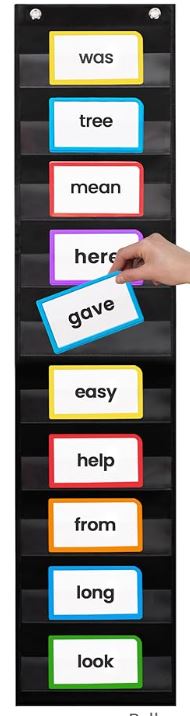
I’m harkening back to my teaching days to recommend this pocket chart. This is a great tool to use for morning or evening routineslist the steps (or better yet, take pictures of your child completing the steps), and when they finish each task, they can turn the card over. Kind of low tech, I know, but that tactile zing one gets when turning over that card is very satisfying! Adults can use it too, it’s great for tasks with a few or several steps that are completed (when we remember) over time – yes, laundry, I’m looking at you! https://amzn.to/3zKojwq

Storage Cubes with Windows and Hooks

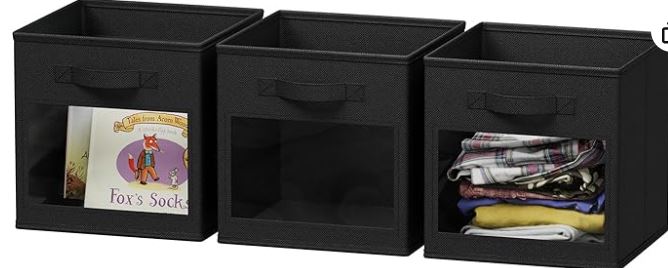
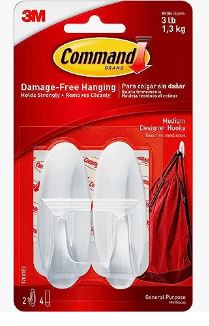
And speaking of laundry…it’s possibly the biggest challenge I come across the most with my clients. Hate doing it, hate starting it, can’t move clothes from washer to dryer….and the biggest issue, putting the clothes away. I’m a big believer in making the system work for you, not the other way around. So, two ideas: first, put hooks in your closet, and use them for items that you’d like hung up, but loathe the thought of putting them on hangers. And second, does everything need to be folded? Nope! Underwear, socks, maybe tee shirts and workout clothes, can all just be tossed into one of these fabulous storage cubes. The window lets you see what lives there. It also enables a heads up as to when you are running out of underwear.  https://amzn.to/4cIbAJp https://amzn.to/3LohhAb

Weewooday Cube 15-20-30-60 Flip Timer

A fun variation on the kitchen timer, this flip cube gives you four minute options. Just flip it to the time you want, and off it goes. Great for “Can I have 15 more minutes, Mom?” as well as “I need to leave in 30 minutes.” Comes in several colors, I just like the pink 🙂  https://amzn.to/4f5Tker

Kick Bands

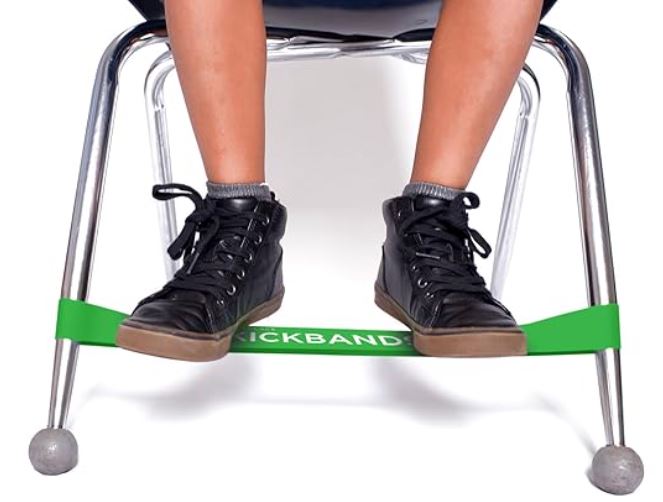
These bands are awesome for kids – and adults – who are more focused when they are performing some type of movement (studies have shown this to be an effective strategy for ADHDers). Simply place the band around the legs of any chair, and you’ve created a spot for quiet, unobtrusive foot bouncing. These have been used in classrooms for ages. Is it time to get some for homework time? Or meal times? https://amzn.to/3xPYb2O 

Blue Ginkgo Multipurpose Caddy Organizer

While it’s helpful for your child to have a specific area in which to do homework (or for you to have a home office that you can use consistently), there are times when a refresh can be helpful (she says as she types this in her husband’s office). Having the basic supplies in a caddy that can be carried easily makes that transition from the bedroom to the kitchen table quick and painless…with less time to get distracted. https://amzn.to/4d3lyVn

Paperage Lined Journal Notebook
Last but not least, a reasonably priced lined notebook. This can be used for…anything, really. A bullet journal, to do list, doodling space, gratitude journal, meeting notes. I have one that I use as a gratitude journal, and one that I use as my brain dump, a parking lot for everything in my head until I move it to my more actionable task app. Comes in tons of colors, the paper is smooth, and at this price, no guilt if you change up your task management plan. https://amzn.to/3xZg8f9 

What items do you find are indispensable? I’d love to hear from you!

Disclosure: I am an Amazon Associate, and have an affiliate relationship with Amazon.
If You Don’t Know The Basic Science Behind ADHD, You Need to Learn It

When I do an initial intake with a new client, one of the questions I ask is “What would you like to learn about your ADHD?”  It’s a pretty broad question, and most responses center around wanting to learn how to be more productive, or how to organize their lives.

At that point, I ask, “How much do you know about the brain science behind your ADHD?”

The majority say they don’t know anything, or very little. The word dopamine is bandied about a bit. And most surprisingly, when I ask if they would like to know more, most say, “I don’t really need to.”

Oh, but you do. You really, really do.

I’m not talking about becoming a neuropsychologist, or obtaining the knowledge that your psychiatrist has. But having a basic understanding of what physically makes your brain different, and how that impacts your life, is, in my opinion, essential. 

First, it is vital to understand that there are physical differences between the ADHD brain and the neurotypical brain. It is not being lazy, or dumb, or anything behavioral. Comprehending that concept opens up an entire world for those of you who have been chastising yourselves about not trying harder. Or just not getting over it.

Would you berate yourself because you haven’t tried harder to see better, if you are a glasses wearer? Of course not. And just because this is a brain related disorder does not make it any less physical.

Repeat that to yourself a few times.

Secondly, I’m not sure how one can make a well informed decision about symptom management if they don’t understand what is causing the symptoms to begin with.

Let’s take an example from my running life. Let’s say I have a pain in my knee. In order to decide how to handle that, (Rest? Ice? New running shoes? Surgery?) I need to understand what may have happened that resulted in this pain before I can decide what I need to do next.

With ADHD, having a working comprehension of what is causing symptoms can help us to make solid treatment decisions. Knowing that my brain has lower dopamine might lead me to use medication to offset that. Understanding that the areas of my brain that control my emotional responses are different than those belonging to neurotypicals might convince me to try meditation to help with regulating my responses.

Deciding on one’s symptom management without having a basic understanding of what is causing the symptoms is like wearing a bikini on a sunny day…in February. You just don’t have all the facts to make an informed decision.

Finally, having a basic working knowledge of how your brain is different enables you to set up your life in ways that support you.

Dopamine low? Let’s make things more fun to get us going! Executive functions negatively impacted? Maybe an accountability buddy or group can help keep us on track. Fight or flight activated quickly? Perhaps I need to let my significant other know this can happen.

I don’t mean to imply that the ADHD brain is wrong, or broken, or just not effective. Not at all. But it IS different. And providing yourself with that knowledge is a gift of self awareness, and part of the ADHD toolbox for living your best life.

I Use Multiple Task Management Systems Simultaneously, And It Works For Me

A common joke amongst ADHDers is, when some well meaning but misinformed soul says, “All you need is a planner/bullet journal/to-do list app,” the response is “OMG, I’m cured! Thank you!!” Cue laughter.

Many folks with ADHD have tried a variety of task management strategies and systems. Whether it’s handwritten or online, ever hopeful folks with executive function challenges sample these systems, reading articles and purchasing apps. And it may work-for about two weeks. That’s when the newness wears off, and the planner is chucked in a corner, ultimately collecting dust.

This is not a judgment of anyone, ADHDer or otherwise, who does not stick with a particular task management system – I personally have many, many apps and journals that didn’t last. But I will say this:  if we know that the ADHD brain is interest based, and is going to pursue the new and exciting option, and will eschew something that has lost its luster, we need to work with that.

Enter my Many Systems System.

I use a variety of systems and tools to keep track of my tasks, and to get them done. And while there is some method to my madness, a lot of it is driven by my mood. Yup, I said it-my mood.

I use Todoist as my main task management system. It works well for me, as I’m able to schedule the many repeating tasks that are part of my coaching business-prepping for sessions, writing summaries, and reconciling my bank account.

But I don’t just use Todoist. For example, sometimes something will pop into my head-let’s say “get my oil changed.” Now if I was Todoist only, I’d stop what I was doing, and put this task into my app, perhaps in the “Inbox” section, which is kind of the brain dump area. 

But sometimes, it’s easier to  just write it on a Post-It note-or more fun (there are some very cute Post-Its). Or I’ll tell Siri to remind me at 4pm to call the mechanic and make an appointment. Or I might just make it a Google Task, and pop it into a specific day on my Google Calendar. Or I have an app called “Quicky Sticky” on my phone, which is basically a virtual Post-It-also a good place to jot something down. Whatever floats my boat in the moment.

If I have a task that I KNOW I will avoid, I put it into my Due app. Due will remind me of a task over and over, all day and night, until I either move it, or do it. So for things like “give the dog the flea and tick meds she hates,” Due is my go to. It is a silent but forceful nag.

Then there are the days that I have a lot to do, and  I feel overwhelmed.  On those days I like to write all of my to-do’s for that day on actual paper, and cross them off as I complete them. “But aren’t your tasks on Todoist? Isn’t this a waste of time and effort?” Yes, there is something less efficient in doing this. However, if writing it all down on paper helps me to feel less anxious, and allows me to get that “Zing!” from crossing off tasks, it’s worth it to me.

So, in case you are counting, I actively employ six apps, and two written methods-all being used simultaneously. 

Now you might wonder if this gets confusing. Honestly-no, it doesn’t. There are a couple of practices that I’ve learned over time to help. First, tasks on apps all have reminders attached to them. This way, no matter where I’ve put the task, it will pop up. Also, I take two minutes at the end of every day putting any written to-dos, and those on Quicky Sticky, into Todoist or Due, so that they too are residing on my phone, with a reminder.
Having a Many Systems System can take some getting used to. But one thing for sure-I never get bored. And that means abandoning my task management system doesn’t happen very often. Which helps me to stay on task much more consistently. And that’s the goal, right?

How To Stop Sending Hidden Negative Messages To Your Kid

Let’s start with the basic premise that you love your kid. Let’s also recognize that if you are raising a kid (or kids!) with ADHD and other challenges, parenting is hard. The frustrations and worries one has as a parent of a neurotypical kid is multiplied by 1000.

As loving parents, we try our best. We not only make sure that our kids have what they physically need, but we also work hard to nourish their self esteem. We praise them. We spend time with them. Some of us even volunteer on teams and in classes, to show them how much we care.

But…somehow, our kiddo still thinks they stink. And still has a completely messy room, and flips out when we ask them to start their homework, or get ready for hockey practice.

Why?? Why are they not getting the message that we are sending, that they are just the greatest?

I am going to quote one of my mentors, and the founder of the Chaos Free Family program (for which I am an affiliate), Mary Smith, and talk about “leaking negativity.” 

When we think about negative reinforcement, we tend to go to punishment, yelling, or even physical consequences. And so if we aren’t employing those tactics, we think we are not engaging in negative reinforcement, right?

Guess again.

There are other more subtle disciplinary tactics many parents employ that are pounding our kids with negative messages that impact your child’s self esteem, and, as you’ve probably seen, aren’t effective in changing your child’s behavior.

Here’s an example of “leaking negativity.” Your child played in their softball game. They had a decent game, although if they had practiced their skills with you between games, as you’d suggested, they might not have missed that ground ball in the second inning. So you tell them how great they played, praise them about all of their highlights-and then, in an effort to help them improve their level of play, you mention that if they’d only practiced more, they could’ve played even better.

“What’s wrong with that?” you say. “I just want to help my kiddo be the best they can be!”

Here’s the issue. Your positive message is followed by “this is what you did wrong.” Your child will come to expect that, so that the impact of the positive message is completely wiped out; in fact, when they hear praise, they are just waiting for the other shoe to drop. No matter how well you tell them that they performed, they will only hear what they did wrong, from you-not their coach, but the person who is supposed to be their biggest supporter.

It’s no wonder they dawdle when it’s time to get ready to go to the ballpark.

It’s important to recognize that many of the ways in which we discipline our kids are negative reinforcers. And that emphasis on negativity can snuff out the ability of the brain to recognize positive reinforcement, causing the reward circuit to weaken, and motivation to decrease.

And your kid’s self esteem to plummet.

So let’s watch out for “leaking negativity.” It’s a sneaky little devil-and our kids deserve to have it removed from their lives.


For more information on leaking negativity, positive reinforcement, and ways to help you have a Chaos Free Family, reach out to me here for a Discovery Call:  https://calendly.com/constellationadhdcoach/30min

ADHD Books That I Love!

As promised, here is a list of some of my favorite ADHD books, just in time for Prime Days on July 11 and 12. Here we go!

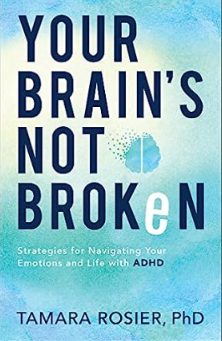
Your Brain’s Not BrokenTamara Rosier

If you are only going to buy one book from my recommendations, this would be the one I would say is a must. I have been fortunate enough to attend a few webinars held by Tamara Rosier, so I was excited to read her book-and it did not disappoint! Your Brain’s Not Broken has user-friendly explanations of ADHD brain differences, including examples. Additionally, the strategies presented, which take the emotional dysregulation ADHDers can experience fully into account, are explained so well that they can be put into action quickly and easily.

What I love about this book: I love everything about Your Brain’s Not Broken! First of all, the notion of motivation being determined by emotions is so thought provoking; it makes so much sense, but this is the first time I’m seeing it spelled out so clearly. Also, Rosier’s presentation of different clients, and her own ADHD, makes this book so relatable. I couldn’t put it down! https://amzn.to/3NF0YzH

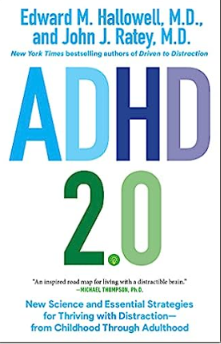
ADHD 2.0 – Edward M. Hallowell and John J. Ratey

Dr. Hallowell could be called one of the Grand Poobahs of ADHD research, treatment, and writing. ADHD 2.0 is an update to Hallowell’s original book, Driven to Distraction, which was (and still is) the ADHD bible. ADHD 2.0, in addition to explaining the brain science behind ADHD, also discusses different ways to enable ADHDers to thrive (such as exercise and connecting with others).

What I love about this book:  Dr. Hallowell’s approach is strengths based, meaning that rather than focus on what one has difficulty with, ADHDers are encouraged to lean on what they are great at. Dr. Hallowell is such a positive force in ADHD treatment, and that shines through in ADHD 2.0. https://amzn.to/44EculN

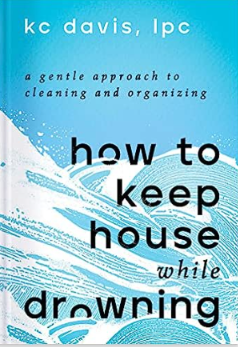
how to keep house while drowningKC Davis

This book, and the YouTube and TikTok videos that KC Davis has created, are legendary among ADHDers. Ms. Davis has developed Struggle Care, a very basic plan for keeping your house in some form of order, based on the (very true) concept that having a messy house is not a moral failure, it is simply a functional challenge. how to keep house while drowning has suggestions for housekeeping that take into account ADHD, depression, anxiety, postpartum…basically, life. You can use the 31 day plan that is presented, or just read through and choose what you’d like to work on.

What I love about this book:  Throughout how to keep house while drowning, one feels like you are sitting and schmoozing with a friend who is telling you that it’s all going to be okay, and that you’re being too hard on yourself. It’s a comforting little booklet. https://amzn.to/46EJfAY

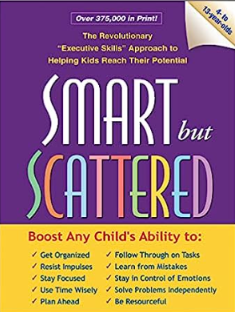
Smart But ScatteredPeg Dawson and Richard Guare

Smart But Scattered is a great book for parents who are looking for practical advice on how to help their ADHD child work with their challenged executive functions. There is a terrific explanation of what the executive functions are, with examples. A section on general strategies to employ when dealing with your child follows. Finally, there are suggestions (with implementation plans) and examples relating to a variety of issues that any ADHD parent will recognize.

What I love about this book: The approach that is presented in Smart But Scattered towards working with your ADHD child is on point. Dawson and Guare tell parents to “modify tasks to match your child’s capacity to exert effort,” and “begin by changing things outside the child before…strategies that require the child to change.” In other words, work with your child, not against them. Doesn’t sound terribly profound…but it is. https://amzn.to/3O4zUuR

All Dogs Have ADHD – Kathy Hoopmann

All Dogs Have ADHD is a picture book full of dogs doing, well, dog things. But what makes this book special is that the pictures tell the story of ADHD. So, a dog jumping into a lake is “diving straight into a situation without thinking about the consequences.” You get the idea. This book is great for kids who have ADHD, and also those who don’t, but spend time around ADHDers. The photographs are beautiful, and the pups are adorable.

What I love about this book: Parents often want to sugarcoat for their kids. All Dogs Have ADHD doesn’t do that-while the book does end on a very positive note, the positives and negatives are given equal time. Also…dogs. Need I say more?? (PS-there is a companion book, All Cats Are On The Autism Spectrum) https://amzn.to/46RhntE

I could go on and on..but I’ll save some of my faves for another post down the road. Happy Reading!!

Disclosure: I am an Amazon associate, and have an affiliate relationship with Amazon.
Must Have Products for ADHDers!

With Prime Day just around the corner (July 11 and 12), I thought I’d share my favorite products and books for ADHDers! This week – all the things.

Mr. Pen Highlighters

Why highlighters for ADHDers? Several reasons. First, it might be a way to fidget/let out energy. Second, color makes everything more fun, which in turn can give us that dopamine boost we crave. Using highlighters as a study tool to sort text, or when going through your to-do list and calendar, can help to keep you focused. https://amzn.to/435x2m2

Textured Tactile Adhesive Sensory Strips

These strips are about the size of a band-aid, and can stick to the underside of a desk, a phone case-wherever you want. They are very soothing to rub, and can satisfy that fidget urge when you are stuck on a Zoom call and you can’t get up and pace around. https://amzn.to/3r8JGDm

The Time Timer

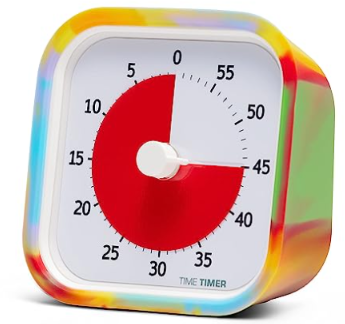
ADHDers struggle with “time blindness,” which means that telling your child “be ready in 15 minutes” is bound to end in frustration for both of you. Enter the Time Timer, which shows time passing-the smaller the red slice, the less time is left. Get the 60 minute version, to have more flexibility. The Time Timer comes in many different colors-I just happen to like this tie dye model.  https://amzn.to/3XuD12x

Mr. Pen Dry Erase Pocket Sleeves

I learned about these when I was teaching. These pocket sleeves are great for morning/evening routines, checklists, chore lists – anything that requires the same steps each time. Make the list, pop it into the pocket, and use a dry erase marker to check off items. No need to rewrite the list!  https://amzn.to/3CStJng

Post-it Notes!

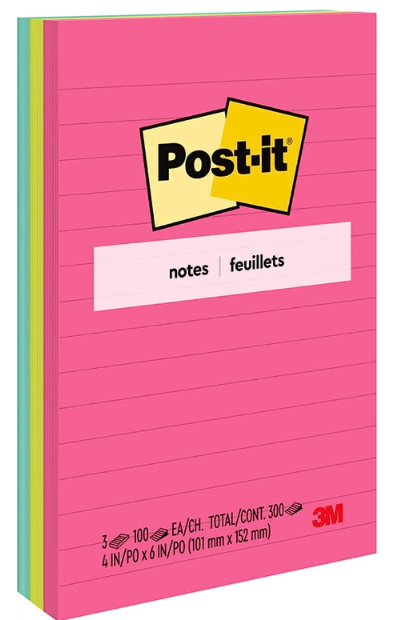
I use Post-It notes for so many things. One use that I have found to be super helpful is to jot down anything that pops into my head, and stick it to the counter, desk, sink…wherever I am. I can add it to my calendar or Todoist app later on, but using Post-Its for those sneaky little things that you remember in the middle of the action keeps you from then forgetting they exist. Perfect for the ADHD working memory challenge!  https://amzn.to/3pt7f9p

hOmelabs Sunrise Clock

Getting your ADHD kiddo out of bed in the morning can be a real challenge. Research has shown that the use of sunrise alarm clocks, also known as dawn simulation clocks, can improve sleep quality, as well as make waking up a more natural process. This particular clock also has the ability to have nature sounds play during the “sunrise,” and has a simulated sunset as well. The colored lights are always fun for the kiddos!  https://amzn.to/3rbmGUp

Uppower Essential Oil Diffuser

Radha Lavender Essential Oil

Speaking of sleeping, I swear by this diffuser and lavender essential oil. All it takes is one deep inhale and I am halfway to Slumber Town. Lavender is known to be calming, so breathing it in during the night keeps me soothed, and asleep. The diffuser has different color settings, so it can double as a night light; it also can be set on intermittent or full blast.  https://amzn.to/3pw5wQO  https://amzn.to/435x2m2

Next week…the best of ADHD books and movies. Happy Shopping!

Disclosure: I am an Amazon associate, and have an affiliate relationship with Amazon.
Try These Ideas To Work On Your Child’s Executive Functions This Summer!

Over the last few weeks, I’ve heard from lots of parents who, upon reaching the end of the school year, want to see a different experience for their child-and for themselves-next year.

And chances are, they would like to see their child improve their executive functions.

The executive functions-there are several, although different researchers have different ideas on how many-are the parts of the brain that allow intentions to turn into actions. They can be divided into the “thinking functions,” such as time management and organization, and the “doing functions,” including task initiation and emotional control.

In ADHDers, the executive functions are impaired (although not necessarily all of them, or to the same degree). Additionally, research has shown that ADHD kiddos can be 2-3 years behind their neurotypical peers developmentally, which translates into a lag in the development of the executive functions.

Simply put, when it comes to the executive functions, your ADHD child struggles.

And not only does your kid feel that they are behind, or panic not knowing where or how to start their assignment, they also have to deal with the many-and I mean many-negative messages they get from teachers, coaches, other kids, siblings, and relatives, about their inability to just DO THE THING.

As a parent, I’ll raise my hand here, and say that I, too, said things like “You’re so much smarter than this,” or “Why do I have to tell you a million times??”

It can be downright upsetting.

But, there are ways to both help strengthen those pesky executive functions, and/or to accustom your child to various strategies that can support his weaker skills. And you don’t have to wait for homework or book reports! Here are a few:

1 – Assign chores.  Being given household jobs is a great way for your child  to feel that you trust them to be responsible, and that they are contributing to the upkeep of your home. However, for our ADHD friends, chores should be structured in a particular way. 

  • Saying “clean your room” really isn’t specific enough. Break the chore down to smaller tasks, and depending on your child’s age, consider giving them responsibility for some of the subtasks first, rather than the whole thing. 
  • Also, how often do you think this should take place? It is better to have small daily tasks than one large weekly job.
  • Set a time of day to accomplish these tasks, with an alarm (not you) announcing the time. This should take place BEFORE fun activities that are tough to pull away from.
  • Use this time to do a chore or two yourself. This is called “body doubling,” and seeing you also working can keep your child on track. 
  • Finally, profusely thank your child for helping with the household responsibilities. Consider rewards (small things, like a trip to the ice cream parlor, or a slurpee)-we all get paid for our jobs, why shouldn’t your child??

2 – Work together to plan a trip or outing. Deciding on a place to go, and then working together to identify, prioritize, and execute different tasks is a great way to not only practice using executive function skills, but to enable you and your child to see where the gaps are, and what kind of support might be helpful. For example, if one of the tasks is to map out the trip on Google Maps, and your child has forgotten to do it, setting a reminder might help-and might stick in your child’s brain as a way to remember tasks.

3 – Keep a family calendar. Time blindness is very common for ADHDers (kids and adults). Putting events and responsibilities on a calendar makes it easier for your ADHD kiddo to see time. It will also help with transitions, as the events of the day are readily available.

4 – Allow for unstructured time – WITHOUT electronics. When your child has free time to play ball, read, draw, run around the woods-whatever they like to do-they are flexing their executive function muscles. Putting together Legos takes attention, organization, working memory, and emotional control. Pretending requires flexibility, attention, and non-verbal working memory. And the best thing about play is that, for the most part, you are not involved. They are strengthening their EF skills, and having fun, all on their own.

5 – Play board games. Family board game nights are so much fun! And without even realizing it, your child will be getting executive function training. Following directions, waiting their turn, developing a game plan-all of these involve the executive functions. And it’s such a wonderful way to spend time together.

This is just a sampling of activities that will help your child to put their executive functions to work, and learn what kind of support is helpful, all at a low pressure time of year. Give one or two a try!