- The Many Layers of the ADHD Tax
What does the expression “ADHD tax” mean? It refers to any monetary penalty that ADHDers are subjected to, due to the executive function issues that are part of ADHD. Here are some examples:
- Fees for late, or nonpayment, of bills
- Fees for overdue library books, rental cars, equipment, due to late return
- Higher interest rates for mortgages and loans, due to lower credit scores associated with late payments
- Larger credit card balances that cost more to pay off due to lack of savings for emergencies
- Large credit card balances due impulse purchases
You get the idea. And you’ve probably experienced one or two of these. But here’s the thing – the ADHD tax is so much more than dollars and cents.
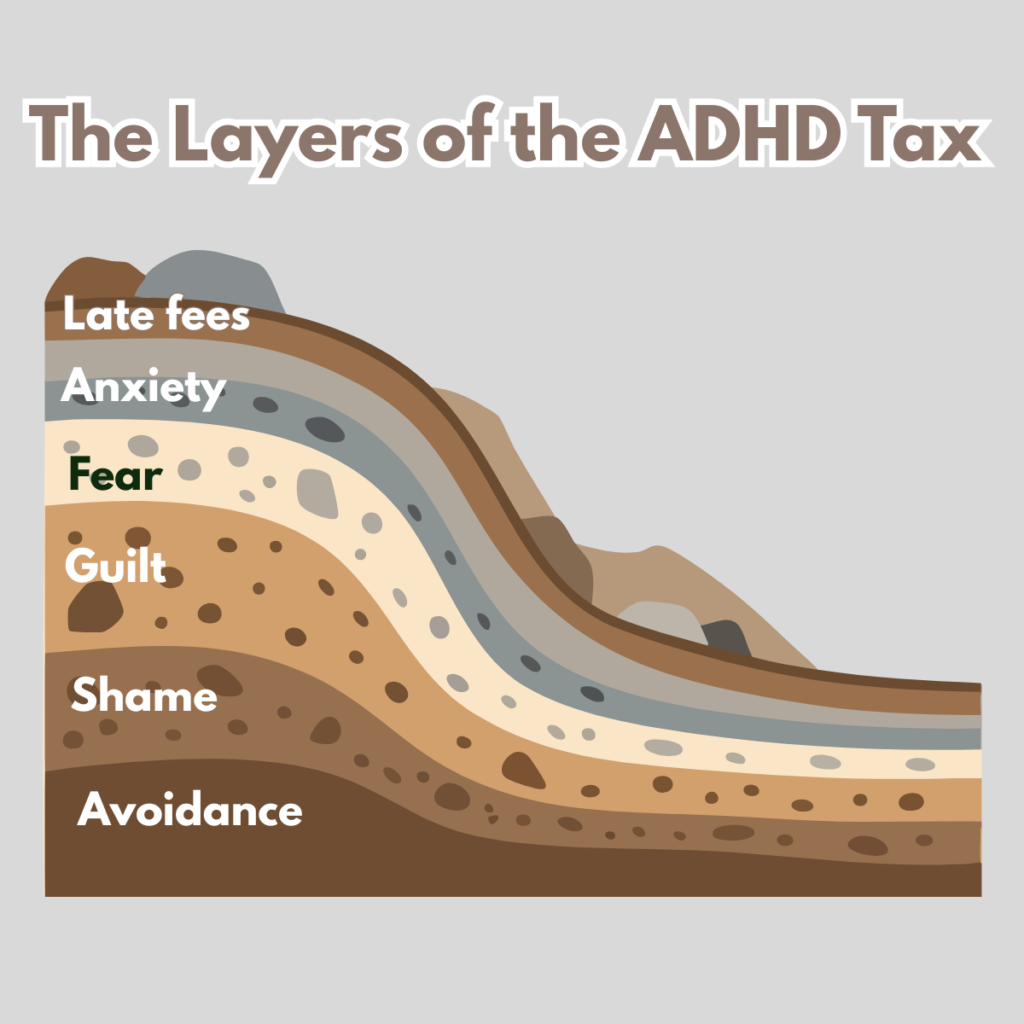
Let’s take the example of late or nonpayment of bills. You receive your electric bill, and toss it on the counter along with the ads and other bills. And there it sits. A few weeks later, you (hopefully!) remember that you haven’t seen the electric bill in awhile, and that you need to pay it at some point. Or you don’t remember at all, until you get the next bill, which includes a past due notice and a late fee. There’s the ADHD Tax…but it’s only the beginning.
First you are hit by anxiety and fear. Suppose your electricity goes out? What if you can’t work because you have no internet, how will you explain that to your boss? Your partner? Your roommates? The brain goes into fight, flight, or freeze mode; your heart is pounding, and you feel panicky. It’s hard to make yourself think and act in a calm manner.
Next comes guilt. You start to blame yourself for this “failure,” as you have a thousand times before. Why can’t you do things right? When are you going to grow up and become responsible? This is all your fault! If your kids are walking around in the dark, it will be on you! Your emotional dysregulation is escalating, and rational thought has left the room.
Next up – shame. Shame is a huge issue for ADHDers. They so want everything to be okay, and would love to be like their neurotypical pals. Yet they cannot be. Here is where you will really go into high gear to put yourself down. You feel embarrassed, and ashamed of your lack of action, despite knowing that it is not your “fault,” it is due to your ADHD. You think about telling your partner, or parent, about this, and you are mortified.
And where does all of this lead? Your amygdala has you frozen already. You have judged yourself to be completely hopeless, and unable to handle this very simple task – paying your electric bill. Plus you may need to call the electric company to explain your late payment, and that is beyond what you can handle right now. So…avoidance. Who wants to think about this situation anymore? It’s just making you feel bad. You’ll deal with it…later.
And on…and on…and on.
So what can we do to improve this situation? Here are some strategies:
- Autopay!! The best invention for ADHDers who struggle with paying bills on time!
- If autopay doesn’t exist for a particular bill, see if you can get an e-bill rather than a paper bill. As we’ve seen, paper bills go into a never ending messy pile that is unlikely to be noticed. For e-bills, create a folder, and move the bills there. You don’t have to even look at the bill, just pop it into the bill folder.
- Pay bills monthly. You don’t have to pay bills as soon as they come in. If you pay monthly, you are more likely to notice what has been paid (and what hasn’t), rather than haphazardly sending off checks throughout the month.
- Following through with the monthly bill paying, make that enjoyable as best as you can – nice snacks, a cup of tea or coffee, music if that helps you to stay focused.
- Create a template or list with all of the bills on it, so that you can check them off as you pay them (organization and dopamine all in one!).
- Have an accountability buddy follow up with you each month. This can be a spouse, parent, or a friend. Due to the delicate nature of money, it’s best to ask someone who will have no trouble being impartial, but also will not take on the role of judge, or coach.
These are all great ways to get the bill paying under control. But the most important strategy? Recognize that you are not irresponsible, or immature, or a horrible person. Understand that ADHD makes these kinds of tasks difficult, and that finding a way to get bill paying done that works with your brain is essential. And have some self compassion – you are not awful. You simply haven’t found an ADHD friendly solution – yet.
- ADHD Friendly Prime Days Ideas for 2026!
Amazon Prime Days are here (June 23 – 26) !! Here are my favorite ADHD friendly or supportive items for this year. Happy Shopping!!
Colorful Mini Notebooks
 These 3.5” x 5.5” notebooks are great for popping into your pocket, purse,or backpack, to use as a catch all for all of the thoughts and ideas that pop into your brain while you’re out and about. They also can be used for doodling during meetings or phone calls, which helps to keep you focused. And they are so reasonably priced that there is no need for any guilt when you stop using it, and then start another! https://amzn.to/4oDZxU2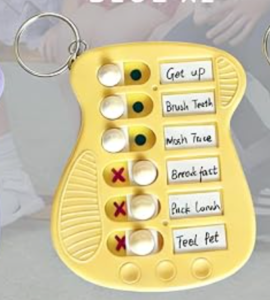
Planner/Reminder Keychains and Luggage Tags
The keychain is a great item for ADHD kids or adults who might forget one or two items for their backpacks. There is room on this key chain to list items, tasks…whatever you need. You can then attach it to your purse to use as a checklist, and consult it before leaving the house. When the task is complete, or you’ve included your item, you can click it to a checkmark on the tag (and that click is a nice dopamine booster!).So if remembering to shut off the lights or turn on the cat feeder is tough on busy mornings, this can help you! https://amzn.to/4vonJfI
For younger kids, or more visual folks, these luggage tags can be given the same job of supporting working memory! Simply put a picture of your kiddo ready to leave the house, or of the inside of their backpack, and the reminder is right there,hanging on the strap! Works for the inside of adult carrier bags too! https://amzn.to/4fYxVqD

Colorful Rubber Bracelets
Here is an awesome ADHD hack I picked up on the “ADHD Chatter” podcast (highly recommended, BTW)! When there is something that we will need to remember to do later or tomorrow, write it on one of these bracelets, and keep it on until you’ve completed the task. You can write directly on the bracelet or use some medical tape. Wearing something physical is a much more in-your-face reminder than one on your phone. The suggestion that got me was leaving some bracelets that say “empty washing machine” on top of the washer. Pop on the bracelet, and there it will stay until you move the wet clothes to the drier! https://amzn.to/3QXr46u
NFC Stickers
This is something I learned about through one of my clients, and although it involves a bit of prep work, once it’s set up it’s brilliant. Did you know that you can set up shortcuts on your phone? (I am referring to iPhone, however I would imagine there’s a way to do this on Android). What that allows you to do is to put a few different actions together under one shortcut. For example, you can build a shortcut that will start a particular motivating playlist at the same time a list of kitchen cleaning tasks pops up. How do the NFC stickers come in? You can start the shortcut by programming your phone to recognize the NFC sticker for that shortcut. So I can put my phone next to the sticker in the kitchen, the playlist pops on, and the list of kitchen tasks opens. Again, a bit of work to get going, but once you do it, it’s a great way to automate your daily stuff! https://amzn.to/4ae16SQWrightslaw: From Emotions to Advocacy: The Special Education Survival Guide
 The Wrightslaw website is THE source of information on special education law for laymen (https://www.wrightslaw.com/). This is where you can find out what qualifies for a Section 504 plan, how the IEP process works, and all things legal relating to advocating for your ADHD kiddo. This book contains so much information that you will find useful. Remember, you are your child’s advocate; it is vital for you to inform yourself about their rights. https://amzn.to/4w177L1
Sonic Bomb Alarm Clock

So many parents tell me that their ADHD kiddos cannot be awakened by any alarm clock, and so they must wake their little darlings…multiple times. Or there’s the “I can only be awakened by my phone” line, which of course means you have your phone the night before, for scrolling indefinitely. This alarm clock has a very loud alarm, as well as a vibrator that will cause the bed to shake! I would give this one a try – it seems hard to ignore! https://amzn.to/4xCdh5P
Skylight Calendar
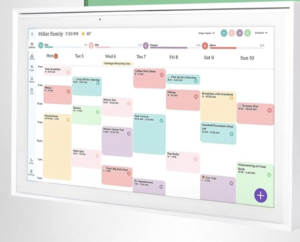 This is a bit pricier than my usual recommendations, but I have so many clients that swear by it, I would be remiss if I didn’t include it. The Skylight Calendar can link together the calendars of the entire family in one place (regardless of what system they are from), so that when you look at Monday, you can see your wife will be late coming home due to a meeting, one child has soccer practice and the other has tutoring. It enables you to plan better. It also helps with the ADHD issue of being unable to see time. By being able to look at all of the blocks that are filled, you will be able to see where you have room to do what you need or want to do. It can also be used for to-do lists, and there is an app for it as well. https://amzn.to/4gt8PQM
Silicone Magnetic Fidget Toys
Choosing fidget toys that help ADHDers focus and stay calm is a very individual matter. Some people need roughness; others like smooth objects. What struck me
 about this particular set is that there is the tactile piece, with each ball having a different texture, but also a magnetic component, so that it can be arranged in lots of different ways. And best of all, it’s SILENT – a huge bonus! Many, many positive reviews for this set, so if you’re looking for a new fidget, you may want to check this one out! https://amzn.to/4uLogXZ
Are there any items that you would like to recommend? I’d love to hear from you!
Disclosure: I am an Amazon Associate, and have an affiliate relationship with Amazon.
- Self Compassion – A Magic Wand for ADHD Challenges
Clients come to me wanting relief – from being late for work or school, not paying bills on time, missing an important deadline or a loved one’s birthday, and the guilt and shame they feel from it all. They ask for strategies and hacks, hoping that I will provide the one technique that will be life changing.
I don’t have all of the answers. But I do have one “magic wand” for my clients, and for you.
It’s self-compassion. Treating ourselves with the same kindness we would use for a close friend – especially when we mess up. Self compassion aids in dealing with ADHD challenges.
When I ask clients to tell me what happens internally when they forget to feed the dog, it is a torrent of critical verbal vomit, both about this particular inaction, and their worth in general. “I’m a horrible person, the poor dog was starving.” “I don’t deserve to have a pet.” “What is wrong with me??”
And many ADHDers are afraid to let go of this narrative, because they feel it is the only way they will ever become “better.” That this self criticism will serve as motivation to change.
How’s that working out for you?
That criticism, that shame and guilt, will not help you to remember to feed the dog next time. In fact, it will have the opposite effect. Research tells us that all of the stress you are feeling due to the critical way you are talking to yourself, about YOU, makes feeding the dog something to avoid – because you don’t want to feel this way again. So actually, it’s the opposite of motivating.
However, exercising self compassion allows ADHDers to let themselves off the hook. Which makes it a lot easier to try again. Motivating.
So, how does an ADHDer who has been hearing from others, and from themselves, that they are lazy, incompetent, unreliable people, develop self compassion? How is it possible to cut down on the negative messages that are the background music of every single day?
First, we need to get a more detailed definition of what self compassion actually is. According to Dr. Kristen Neff, self compassion has three parts: self kindness, shared humanity, and mindfulness. So, treating yourself as you would treat a dear friend, recognizing that no one is perfect, and that everyone on this planet makes mistakes, and having awareness of what you are telling yourself, so that you can change this negative diatribe, rather than becoming consumed by it.
Second, we also need to understand what self compassion isn’t. It’s not thinking “everyone else is wrong, and I’m right” or “so I didn’t feed the dog, who cares? The dog doesn’t need to be fed all the time anyway.” It’s not about denying responsibility.
When you mess up, you’re still responsible. It’s just that it’s not unforgivable, or a sign of a flawed character. So you can own your mistake, because it’s just that – a mistake. Not the end of the world! Quite a different message than your inner critic is feeding you, no?
Using our dog example, taking responsibility would be “Darn it, I forgot to feed the dog again!” Being mindful would help us to stay aware of the messages we are giving ourselves in this moment, and letting the negative narrative go. Then kindness and shared humanity would kick in: “I feel badly that I forgot to feed the dog. I got busy and lost track of time. Typical ADHD! But It doesn’t mean I’m a bad pet parent, I love our dog! Sometimes people forget things. I’m doing the best I can.”
One additional part I like to add in is the “and” statement. This gives you a chance to try to improve the situation. So, in our dog scenario, it would sound something like this: “And I’ll feed her right now, and try setting an alarm to help remind me next time.” Your energy isn’t drained by inner criticism, so you can use it to address the actual issue.
Not easy, I know. Breaking a years – or sometimes decades – long habit of being the villain in your own story can be incredibly difficult. But it is 100% worth it. Research has shown that developing self compassion can absolutely be life altering. That calm verbal hug that you are giving to yourself can help you to feel safe, and secure in the knowledge that if you mess up, it’s okay.
PS – For some strategies for making self compassion, rather than self condemnation, your go to, click here! https://digioh.com/em/33248/200780/evndrbqfty?demail=(email)
- The Change In Your Kid Starts With You
Parents often ask me to coach their pre-teen and teenage kids. They are concerned that their children are having difficulties in school, with homework, chores, handling their emotions, mornings and evenings. Parents would like to see their kids change.
Many parents are completely surprised when I tell them that in order to see their children make progress, the first place that change has to happen is with them.
Wait, what??
Yes, it’s true. YOU are going to have to make some changes if you want your kiddo to do so.
Here’s a common example. Your kid is constantly running late in the morning. They have missed the school bus many times, causing you to run behind on starting your day because you have to drive them to school. There are arguments every morning. You feel exhausted right at the beginning of the day. How can this situation be addressed and improved?
We could say that your child needs to get out of bed earlier, should put their phone away, ought to pick out their clothes the night before, or just needs to grow up. But saying this over and over will not make change happen. However, if YOU make changes – for example, taking their phone out of their room at bedtime so that it’s unavailable for morning scrolling, working with your child to figure out timing for the different parts of the morning routine, maybe even setting up a reward system – then there is a shot at improvement.
Here are some general parental changes that are a good starting point:
1 – Learn as much as you can about ADHD – Read. Watch videos. Go online – not TikTok, but real qualified sources of information. Join CHADD and other support groups. Develop a really solid understanding of what ADHD is and isn’t, the science behind ADHD, and common misconceptions. I’m alarmed when I find out that parents haven’t done this. If your child had diabetes, wouldn’t you want to know everything about it? Well, the same applies to ADHD.
2 – Keep in mind that kids with ADHD are often 2 – 3 years behind their peers in terms of their executive functions – So this means the statement “a kid who is _____ years old should be able to _________” is completely pointless. By their birth date your child may be 13 years old, but in terms of their development, they could be somewhere around 10 or 11, causing them to be incapable of what their age mates can do.
3 – Take the role of advocating for your child seriously – As a retired teacher, I hate to say this, but many teachers still have not gotten the training they need to work with kids with ADHD. Other adults may not know anything at all. You may have to (nicely!) go toe to toe with teachers, principals, sports team coaches, camp directors, family members. This is, however, your job as a parent. Your kid should know unequivocally that if there is anyone in this world who will fight for them, it is you.
4 – Shaming and guilting your child will actually make things worse – Ah yes, the old “my parents yelled at me and embarrassed me in front of my friends, and it worked.” Perhaps that is so. Thankfully, we know more now about what is effective and appropriate. Kids with ADHD already feel “less than.” Making them feel badly about themselves will not help them to change their behavior in a positive direction.
5 – Tell your child about their ADHD – Your kid has a right to know that his brain works differently than some others, and that does not make him dumb or bad. Give them at least the basics; sprinkle in some knowledge of both famous people with ADHD, and family members who may have it.
6 – Work collaboratively with your child to solve problems – In the scenario above, sitting down with your kiddo, talking about what you see as the problem, and asking them how they think it should be solved gives them agency and motivation. It also can be a huge time saver. They know themselves best!
7 – Sometimes, you will have to do something unpopular – Kids love their electronics. Many parents use taking them away as a punishment, which very rarely does anything to change behavior. You may have to say “no electronics until homework is done” or “you can have your phone after you’ve cleared the table.” Your kid will not love this. That’s okay. The idea of work before play is a solid one for kids to learn early.
8 – Every single day, love your child – Kids with ADHD can be difficult to raise. Between executive function challenges and emotional dysregulation, home life can become very chaotic and charged. Take breaks when you need to (I’m a big fan of the lock yourself in the bathroom strategy). But strive to show your child that you love them, whether it’s a quick hug or a compliment. Don’t skimp!
9 – Try to keep your sense of humor – This can be very hard to do. There are days where nothing seems funny at all. If possible, try to step back just a little, and see if you can find some humor somewhere. You can’t yell while you’re laughing!
As you can see, your change comes first. I put learning about ADHD first because I feel that sets the stage for seeing your child as a person with a brain that works differently than the typical kid, which will in turn help you to help them.
Change IS gonna come. For your kid…but first, for you.
- Spending Control the ADHD Friendly Way, Part 2!
In my last blog post, I talked about doing some detective work to find your particular spending patterns. This would help you to develop spending control strategies that match up.
But, what if, despite your best efforts, you find it almost painful to give up the dopamine charge one gets from shopping? Suppose you are having a really hard time controlling your spending?
First, and probably most important – self compassion. No shame, no guilt! You are not bad, or selfish, or irresponsible. You are, in fact, dealing with a neurological difference that causes you to be motivated by what interests you (yup, that’s ADHD). Giving up that immediate dopamine hit is HARD! So give yourself kudos for trying, not thumbs downs for failing.
Plus evidence shows us that exercising self compassion actually helps us to accomplish our goals faster than being negative towards ourselves. Makes sense, when you think about it – who would want to pursue a goal that results in feeling badly about ourselves?
Second, it can be helpful to put some small, one size fits all strategies in place to get things moving. Here are some tiny tweaks you can make to get the spending control ball rolling in an ADHD compassionate way:
- Make a list of small things to buy that can make you happy – Can buying a new nail polish color scratch the itch of wanting to shop? I know I can go to any Staples and feel joy by purchasing new Post-Its. The idea is to own your dopamine chasing, but keep a lid on how much you spend to do so.
- Secondhand/thrift store, Free Cycle – My daughter-in-law is the queen of Goodwill shopping. She can spend hours looking for deals, and always walks out of the store with a designer outfit that costs her next to nothing. The thrill of the hunt! Also, if you have a Free Cycle in your town, it is a great way to “shop,” with all merchandise costing zero. Free dopamine!
- Make controlling spending fun! – Partner up with a friend, for accountability and cheerleading. Tally up all of the times you DON’T buy something. Make up a rap or poem to remind you of your non-spending goal. Getting that dopamine in other ways!
- Unsubscribe from shopping emails – this is SO effective! If you need something, you will be able to get it, without the help of the thrice daily emails. And I get that little dopamine push every time I see “you are now unsubscribed.” Win/win!
All of the above strategies can work for pretty much anyone. Remember, though, that the most effective way to control spending is to understand the B and the E in B.E.A.S.T. – background and emotions. Armed with that information, you will be unstoppable!
PS – Want a copy of my “Strategies To Control Spending?” You can find it here, free! http://digioh.com/em/33248/200557/j9j2ny23pd